Welcome to my blog...whatever image springs to mind, be it a hippopotamus, Tigger, red-haired Highland cattle, or a simple kitchen table, 'Unless a Seed' is a four-legged creature. My hope is that having read a Book Review, a Poem, or a What is a Christian? or some random post in Everything Else, you will be kind enough to leave a comment or a short reply. And I hope you enjoy reading its contents

What is a Christian?

Book, Podcast, Film, and Blog Reviews

Poetry

For Writers, Writing and Everything Else
Tomorrow might not work
Long walk tomorrow…not sure I’ll make it. A poem for those whose tomorrow might not work.
The weather forecast
Has its sun yellow spikes
Diminishing in number, and
Temperatures on the slide

Nevertheless the rucksack,
Boots, socks, map, thermos
And karrimat: all strapped in
With a lack of good sense
Limiting factors include:
Fourth toe on left foot,
Bladder, or worse, and
The thought of home
It doesn’t say that Jesus
Set his face like flint
Just: ‘set his face
To go to Jerusalem’
But His praying soul
Percolates into mine
Maybe it will carry me
To Ivybridge for tea?
For I look for comfort
Not a cross, or nails
Or nakedness
Or false witness
A kudos on Strava, perhaps
To ease the pain
A cognac, make it a double
If tomorrow works
Tomorrow might not work
For any of us
My prayer is for all those
Whose tomorrow doesn’t work
The Lord bless you, and keep you
The Lord make His face
To shine upon you
And give you peace
The Two Moors Walking Challenge Post #4, 25th March, 2026
The day before the practice first leg
Today/Tomorrow: a practice walk for the first section from Wembury beach to Yealmpton (7.5 miles), then Yealmpton to Ivybridge (9 miles) and somehow back…by bus and taxi I suspect.
Today: a practice of inactivity, including writing this blog. Gusty outside. Rooks on kamikaze missions blown off course by sudden gusts. Perhaps they’re enjoying unpredictable flight? It’s high tide at 10am…I might excuse myself from a ‘writing day’ to go and watch the waves pound in on 40mph winds
Tomorrow: I think a normalish start to the day, having packed this evening. Normalish means up around 6 and a quick breakfast. If I can leave by 7, I’ll be pleased. Certainly by 8. Sixteen and a half miles is daunting. I haven’t walked more than ten for…errr…hmm…dunno.
Yealmpton: the temptation to call a halt here will be strong, I suspect. And maybe wise. Or necessary. The guide says 4 hours. So, I should arrive by late morning. Then 4.5 hours to Ivybridge. If I can get there by 5pm, I’ll be chuffed.
Days to go: 62
Spiritual: I’m in Wembury for two principal purposes. Firstly, to write. In fact, to get back to editing and re-writing The Bait Digger II. Secondly, to take a breather from the build-up to the book launch last Saturday, which was great fun.
In this ‘sigh’, this breather, I am aware of a few things on my mind: a sermon to preach later in April, Israel and Iran: as related to the parable of the prodigal son. Palestinian/Israeli poets: a potential direction for next year’s dissertation.
Lastly, I will have been in Winscombe for a year on Sunday. So it’s time to take stock.
Whether any of this occurs to me whilst walking tomorrow, who knows! I might stick the earbuds in, plod along to various podcasts, and leave my meditations for another day.
The Fragrance of a Tomb
Imagine you were one of the early visitors to the empty tomb…you’d have been overwhelmed by the smell…a pleasant smell
The New Testament accounts of the death and burial of Lazarus and Jesus, if nothing else, take us into the burial customs of first-century Palestine.
The Burial of Jesus
This morning, I read the very familiar passage describing how Joseph of Arimathea and Nicodemus secured the body of Jesus and took 75 pounds of myrrh and aloes to soak into the wrappings for Jesus’ burial in the garden tomb.
It’s extraordinary to think I’ve known this passage since childhood, but until this morning had never smelt it. The body of Jesus and the tomb would have smelt myrrh and aloes
Joseph of Arimathea asked Pilate for the body of Jesus. Now Joseph was a disciple of Jesus, but secretly because he feared the Jewish leaders. With Pilate’s permission, he came and took the body away. He was accompanied by Nicodemus, the man who earlier had visited Jesus at night. Nicodemus brought a mixture of myrrh and aloes, about seventy-five pounds. Taking Jesus’ body, the two of them wrapped it, with the spices, in strips of linen. This was in accordance with Jewish burial customs. At the place where Jesus was crucified, there was a garden, and in the garden a new tomb, in which no one had ever been laid.
And 75 pounds in weight (100 Roman pounds or the equivalent of 75lbs (just over 5 stone) is a significant weight to carry through the streets of Jerusalem. Burial, due to the warm climate, was usually carried out immediately to offset any odour from rapid decomposition.
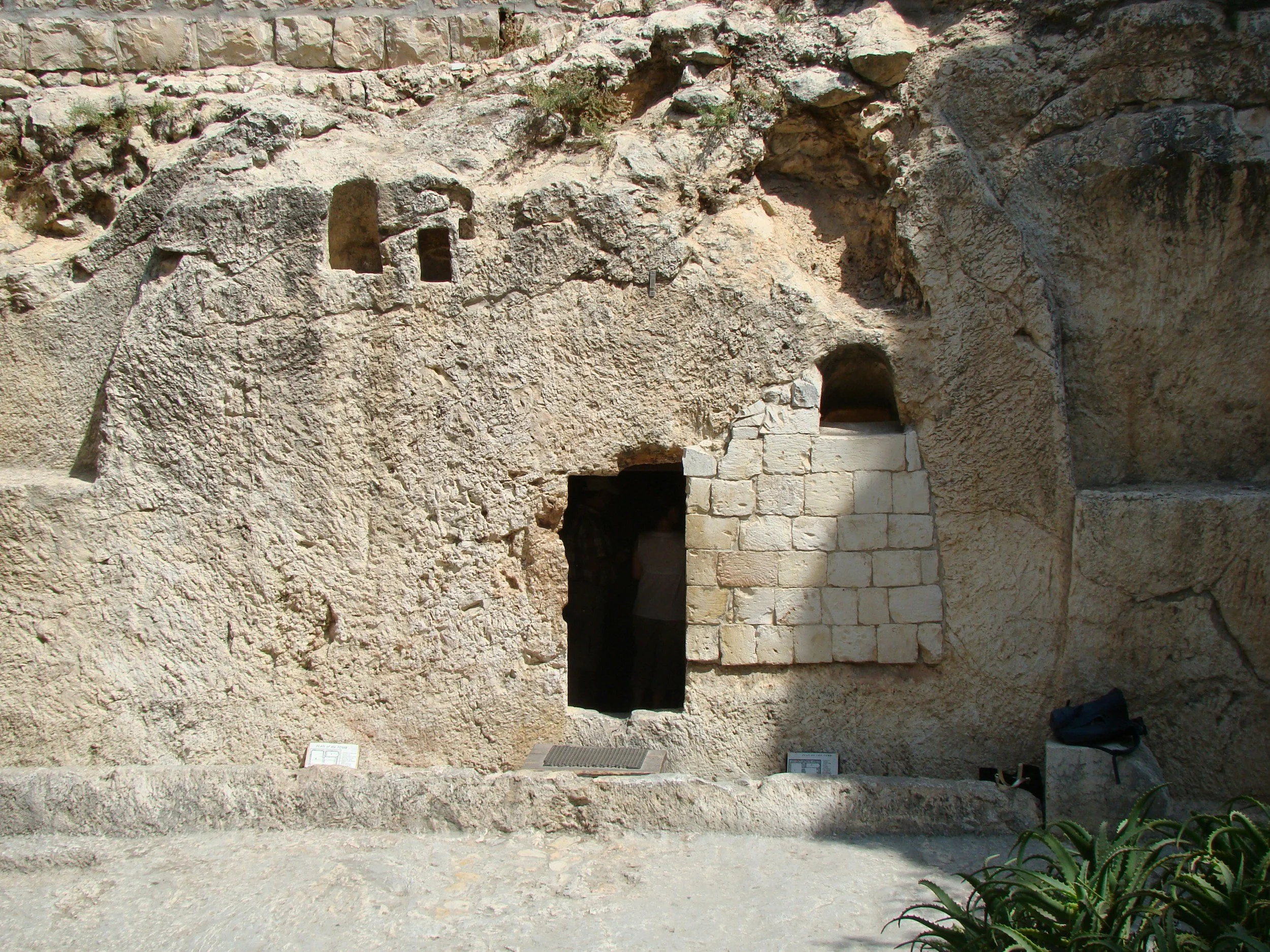
I can only imagine that 75lbs was excessive, only affordable by the very rich, and a reflection of the love and honour Joseph and Nicodemus wished to pour out to Christ in his burial. An extraordinary act of bravery since the highest powers were involved in his crucifixion only hours earlier: Pilate, the High Priest, the Sanhedrin, and the crowd who had called on Pilate to order Christ’s crucifixion. Scripture also states that the Romans had placed a guard on the tomb. The burial was an entirely male act, though Luke records that the women, who were to return with more spices and fragrant oils after sunrise two days later, witnessed the burial, the washing, and the anointing work of Joseph and Nicodemus.
‘And the women followed (Joseph and Nicodemus), and they observed the tomb and how his body was laid’
When Joseph and Nicodemus had finished washing the body, wrapping it in cloths impregnated with the myrrh and aloes, they left the wrapped body of the Messiah on a stone slab in the tomb, and rolled the stone across the entrance; later sealed by the soldiers. (Mt27v62-66)
If I may be permitted to speculate, by the third day, had it not been for the anointing work of the burial party i.e. Joseph and Nicodemus, the tomb should have smelt putrid due to the decomposition of the body.
There were two reasons why it didn’t:
1. The body wasn’t there. Jesus had risen from the dead. It didn’t decompose
2. The linen clothes, and therefore the tomb, would have smelt very fragrant due to the anointing spices and oils
When Peter preached the first sermon on the Day of Pentecost, he quoted Psalm 16:
‘You will not leave my soul in Hades, nor will You allow your Holy One to see decay’ v27
The Burial of Lazarus
When Jesus arrived at the house of Martha and Mary, Lazarus, having died and been wrapped and buried, He commanded that the stone that lay against the tomb be taken away.
‘The Jesus, groaning in Himself, came to the tomb. It was a cave, and a stone lay against it. Jesus said, ‘Take away the stone.’ Martha…said, ‘Lord by this time there is a stench; he’s been dead four days’…Jesus cried out with a loud voice, ‘Lazarus, come out!’…he came out bound hand and foot with grave clothes, and his face was wrapped with a cloth. Jesus said to them, ‘Loose him, and let him go!
There are some significant differences from Jesus’s burial. No circular stone and no sealing. The entrance to the cave is closed with a stone, which is taken away, not rolled away. Evidently, the burial clothes of Lazarus had not been impregnated with expensive spices because Martha said ‘he stinks’; present tense. Lazarus had died, been buried, and had started decaying in the heat; the cave stank, which makes the raising of Lazarus even more remarkable. The decay was reversed and, once freed from the grave clothes, he walked freely.
Evidently, the burial clothes of Lazarus had not been impregnated with expensive spices because Martha said ‘he stinks’; present tense
In the following chapter, chapter 12 in John’s gospel, six days before Passover and Christ’s crucifixion, Lazarus is sitting at the table with Martha and Mary, his sisters, Jesus and the disciples, and Mary appears with ‘a pound of very costly spikenard and anointed the feet of Jesus’.
It is important to note that any suggestion that Mary could have used this to anoint her brother’s body and grave clothes is an argument from silence; we don’t know how or when Mary obtained the spikenard. But having it in her possession, she uses it to anoint the feet of Jesus.
Jesus’ view of this extraordinary act was to say, ‘Leave her alone, she has kept this for the day of my burial’.
And, just like the garden tomb would smell days later, ‘(Mary’s) house was filled with the fragrance of the oil’.
To conclude. Sometimes we need to use all five of our senses – including the sense of smell - to fully imagine a story; to imagine being in its location and breathing it in. Paul writes:
‘Now thanks be to God who always leads us in triumph in Christ, and through us diffuses the fragrance of His knowledge in every place, for we are to Him the fragrance of Christ amongst those who are being saved and those who are perishing’ 2Cor2v13,14
International Women’s Day 8th March 2026
A sermon interrupted, a Radio 4 programme not turned off…what’s going on? And why mention International Women’s Day?
It’s 7am, and I’m on a walk. A cold mist is soaking through my t-shirt. Despite this, my attention is taken up by the Sermon of the Week from Bethel Church, Redding.
The title is Love Looks Like Action, and the speaker is Gabe Valenzuela.
At this point, I have no idea it is International Women’s Day. I don’t find out until after I’m back home, showered, and listening to R4 getting my standard cuppa and cereal breakfast organised.
I’m drawn into the talk. Gabe is combining serious points with disarming humour. Sometimes I’m laughing, hoping no one’s too close to wonder why this man walking along the Strawberry Line path is laughing to himself, early in the morning.

His text is the familiar parable about the Good Samaritan. After about 30 minutes happily agreeing with his conclusions, I find myself taken off in an unexpected direction, unrelated to any sermons or commentaries on this parable, in which the punchline is ‘Go and do likewise’.
A new punchline? Not one that is written down, but one that came from the heart. Of course, Jesus can be thought of as the Samaritan, come to bind up our wounds and pay for our recovery. A beautiful picture of God’s love and grace. This is wonderful and true, but I saw something quite different.
Jesus could tell this parable because He also experienced being the man left by the wayside, battered, bruised, wounded and robbed. Yes, on the cross, but also in life.
As Gabe Valnzuela pointed out, we have all been the person beaten up at times.
Also true of Jesus. The question is, who was he thinking of who had shown him kindness and poured healing oil on Him?
First, though: the wounds.
1. Early childhood fleeing to Egypt as a child refugee, an outsider. Think of the hostility in our society, spoken or unspoken, towards refugees…in the school playground.
2. Biting, continual criticism and accusations from the Pharisees
3. Direct opposition and temptation from Satan and evil spirits
4. His own family accuses him of madness
5. Peter disowning him, Judas betraying him, the other apostles abandoning him
Throughout his public ministry and before he was ministered to, received kindness from, gentleness from, love from…women.
Martha and Mary, Mary Magdalene, Mary his mother, Joanna, Susannah, and Salome. In very different ways, they all ministered to him. Maybe you know how. But I want to mention one woman in particular, the Samaritan woman at the well. Maybe she was the inspiration for the parable? The story is related in John chapter 4.
Why this woman? In part because she is unnamed, and a Samaritan, considered to be unworthy. Not only that, but had lived such a tragic life, living with a man but not married, having previously had four husbands. And yet, when Jesus was weary, tired, incapable of taking another step, ground to a halt in the shade by a well…it was this woman who gave the Saviour a cold, refreshing drink of water, when he had no means of getting the water up from the well.
If you’re a man and reading this, perhaps you are thinking back over your life and how particular women have shown you kindness, gentleness, and love just when you needed it and, perhaps, when you least deserved it.
Even in anticipation of Jesus’s ultimate suffering, the indignity of betrayal, arrest, illegal trial, and undeserved execution on trumped-up charges leading to crucifixion, death and burial, it was women who knew what to do…and did it.
First, Mary, the sister of Lazarus, anoints Jesus's feet with very expensive perfume, filling the house with the scent. Jesus knows why. He says, ‘Leave her alone, she has kept this for the day of my burial’. An act of devotion and love, knowing that he would soon suffer and die.
And lastly, the women who went to the tomb with spices to roll the stone away and enter to anoint his dead body: Mary Magdalene, Mary the mother of James, Joanna, and Salome are named.
Why this woman? In part because she is unnamed, and a Samaritan, considered to be unworthy
What do you think Jesus felt knowing these women had done all that even for him in death?
After all this came from nowhere and tumbled into my thoughts and made tears fall, I walked along the road back to my house, showered, and flipped on Radio 4.
The Morning Service. A programme I usually switch off, as it often feels too stiff and formal. But not this morning. It’s a service from Zion Temple Celebration Centre, in Rwanda, and the stories of, I think, five women in rich Rwandan accents are celebrating International Women’s Day and their faith and love for Christ and telling how He has transformed their lives and is at work today in His risen power, are being told.
That stopped me in my tracks. It’s one thing to be ambushed whilst listening to someone else’s sermon, quite another to be arrested by Radio 4.
So, yes... it’s not only worthwhile to celebrate International Women’s Day, but also important to remember and honour the women who ministered to the wounds Jesus received during His life and in His death…and to give thank God for this reality in our own lives. And not just to ‘give’ thanks, but to pour it out — just like Mary poured her ointment on Jesus’s feet.
The Servant Girl & the Prodigal
Luke 15 parables culminating in the Parable of the Prodigal Son keep on giving…grab a bible and soak in it…like in the poem.
In case you didn’t know
My name is Miriam
My apron is filled
With dry thistle heads,
Slivers of bark, and
Desiccated dung
And my flints
Today, I am honoured
Brought to the Master’s house
To fire up the cedar wood
Piled under an oval bath
A hot soak for the prodigal
Everything for him
Steam and sweet smells
Unlike the submerged one,
Him with the matted hair
Dirt-packed fingernails
Cracked, parched lips
And blackened feet
I washed his head
With lye and scented oils
Until his skin
Taut with worry and weather
Yielded its hidden colours
And forgotten warmth
I saw his lips curl, the
Crease of an early smile
And tears drop silently
Onto the water.
His soul retrieving
Its long-lost peace
On a peg, a fine silk robe
Flowed down to meet
New leather sandals
With my eyes closed
I saw all his history
Slip away and sink,
Claimed by the water.
His fragrance followed me
To the music and the feast
I watched the other son
Loiter in the shadows
My smile, my scent
Only hardened his final gaze
As he stood alone
Before joining the night
Beloved Tehran
Iran, the birthplace of some of the world’s finest Persian poetry, suspended once more between people and politics
Slack-jaws slung low
Stomach knots
Tightening their grip
My passport lost
I’m losing connection
With citizenship
All my antennae
Their anxiety exposed
No false alarm

Tension is rising
On the city streets
Of my beloved Tehran
A Persian beauty
Unwilling to be defined
Hatred of Israel declined
Seeking a partner
In pursuit of peace
Began to sing
A song that carried
One heart then many
Into the courts of heaven
But not before
Bullets made of lead
Had painted in blood
And laid low
The courageous choir
Of the silent dead
And so…I hold my breath
My prayers?
Inaudible groans
As lives, once more, are
Reduced to the rubble
Of temporary loans
The Two Moors Walking Challenge – post #3, 25th February 2026
Early morning walk - pennies in the pot
Was this a ‘training walk’ or simply an early morning walk that won’t hurt the prep for the Big One in late May/early June?
I’m not sure it matters. What would matter is not walking.
4th Toe, Left Foot Report
Yesterday’s walk was from home to The Crown and back, trudging through heavy mud at times in glorious sunshine. You should know that the psychosomatic effect of approx. 40 days of rain and 2 days of sun is profound. Physical health has suffered in many, and the dull days have had a hibernating effect on the inner being. Psychobabble? Maybe, but consider how you feel when the sun is up after its long exile, and you are outside…tell me your mood and sense of well-being isn’t turned up a notch?
I digress. Yesterday, after 5 minutes, I was afraid that I’d have to tell my walking partner that I’d have to stop, but the pain faded - thankfully. And today? No problem. No pain. How random.
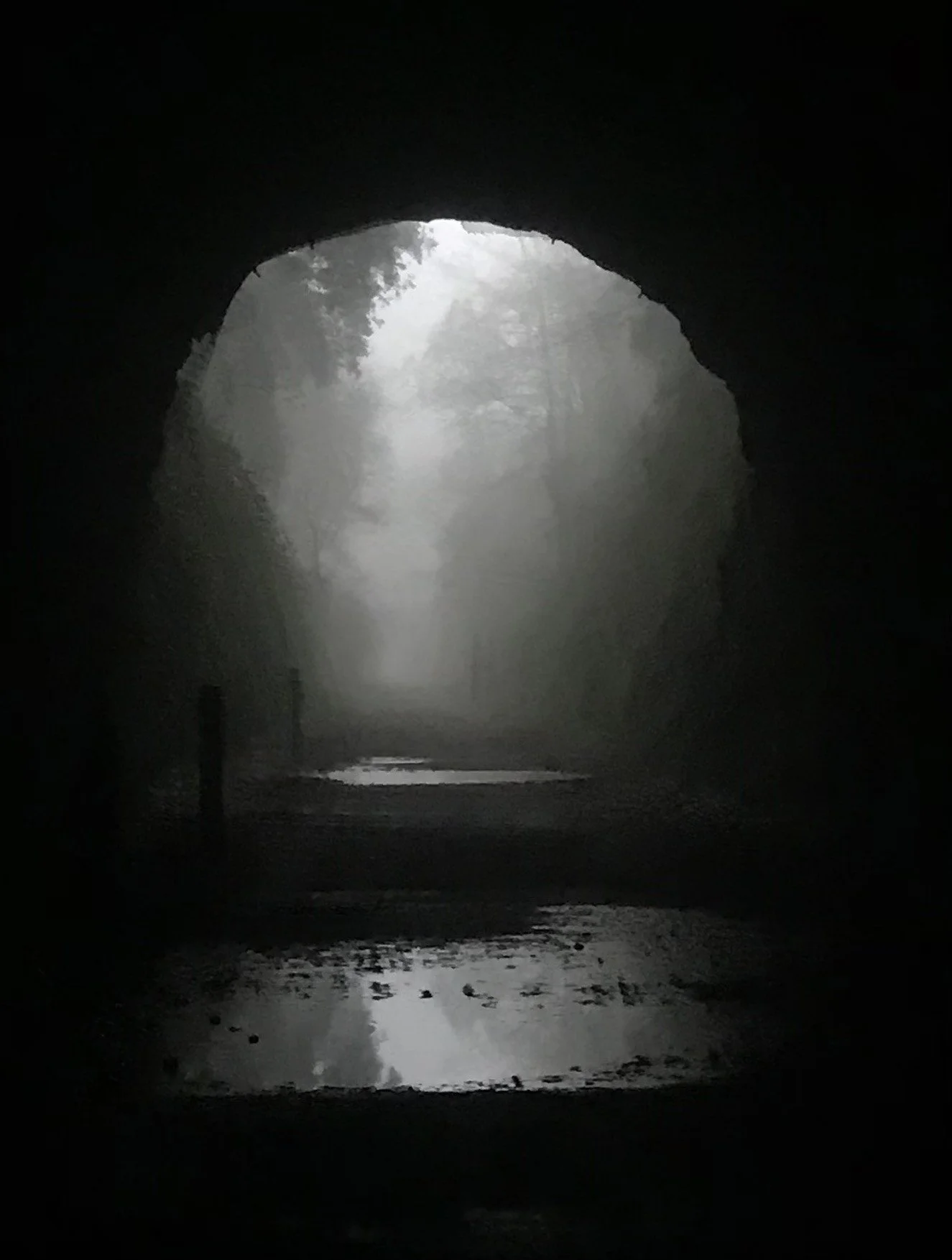
Shute Tunnel, Shute Hill, Sidcot
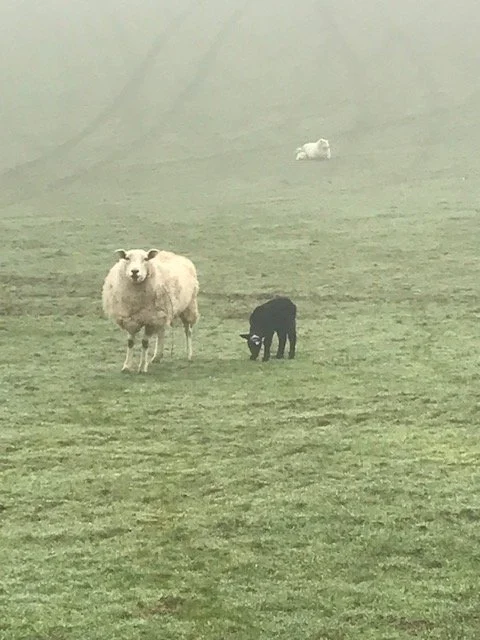
This is a beautiful walk, and I was up early enough to avoid all but a few humans and well-trained dogs. It was nature and I. It was blackbirds, robins, crows and jackdaws, unidentified small singing birds balancing on the upper blackened branches, and sheep emerging from the still mist, and, unexpectedly, a few lambs already. Two black ones, and a few very muddy cream versions and their mud-infested mums. And a dead black lamb, left lifeless, lying on the muddy soil; ignored by the others.
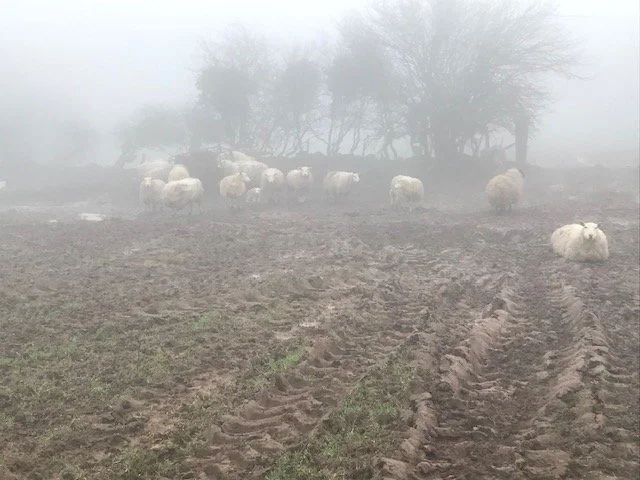
It’s beautiful, but Shute Hill is not one that I could run up. Small steps only. Slow. Deep breaths. But the reward, not today in the mist, is a panoramic view across to Crook Peak and over to the run up The Severn towards Portishead, and a lovely view over Winscombe.
Stats
8.92km; 1hr45min; 205m gain; Av heart rate 91; Max 131; 11,302 steps
Spiritual
No comment at the mo. But we’ll go there soon, I’m sure. The pneuma (spirit) as opposed to the psyche (soul) and the soma (body)
Book Review: The Wizard of the Kremlin Guiliano Da Empoli Pushkin Press – 2023
If you’d like to be taken into the heart of Russia, and Putin’s Kremlin, then buckle up and read The Wizard of the Kremlin
And soon to be released as a film under the directorship of Olivier Assayas
‘Politics has just one goal: to address man’s terrors’
Guiliano Da Empoli has created a masterful fiction that reads like a documentary, deftly squeezing in his own characters between well-known contemporary Russian leaders, mainly Putin, government ministers, and oligarchs.

The setting, which I found faded into the background as the story took hold, is an interview conducted by a French intellectual with Vadim Baranov, a retired advisor to ‘the tsar’ (ie Putin).
Baranov, therefore, becomes the main narrator. Through his revelations, we are taken into the heart and mind of the Russian psyche. How Putin emerged as the strong man ‘to address Russia’s terrors’ – the disaster of the free market unleashed in the aftermath of the collapse of the USSR and the encroachment of NATO as its former territories, such as Ukraine, flex their newly acquired independence muscles to buddy up to Europe rather than ‘mother Russia’.
As you might expect, there are unexplained deaths of would-be opponents to Putin’s regime, wonderful Russian names, a beautiful love interest, Ksenia ‘a woman who would burn down a whole city to spare herself a moment of tedium’ , Gary Kasparov, and a brooding sense of the depth of the Russian soul and yet a lingering sense of oppression, or suppression, through enforcing a strict communist-based ideal of frugality and equality, ‘you only have to flip a single switch for the entire room to be bathed in the same brutal and uniform light’.
Baranov is portrayed as a hardened and cynical spin doctor and yet Da Empoli invests a critical chink of light in this machine-like personality in the form of his tender feelings for his daughter Anya, ‘each moment that he lived in her company, represented a small miracle…in those moments gratitude flooded through him like a hit of vodka’.
Whether the film version, in which the narrator is an American, I suppose to elicit a further taught string to the underlying menace of Moscow, is a match for the novel remains to be seen…but I will certainly join the queue at the cinema to find out.
A disturbing and yet compelling read. Thoroughly recommended.
Friday’s Irregular Poetry Corner – a day late
Friday’s Irregular Poetry Corner -a day late. Guest Poet: Kimberley Johnson, Golf
Guest poet: Kimberley Johnson
Featured Poem: Golf
Collection: Uncommon Prayer, Persea Books, 2014
Golf
Glory be to God for bungled things, for the early frost, for the miscarriage the land mine sunk forgotten in the wheatfield, the liger. For all things marred and misbegotten, praise Him – hamfisted, hamstrung, and never else so like us. So comforting a kinship that we hymn it constantly: “OGod!” at the carpenter’s hammered thumb, “O God!”, at the failed marriage, “God damn!”, on the fourteenth green. The chorus amens; cue the responsory:
Versicle: Why in lightning should you hold up a one iron?
Antiphon: Because not even God can hit a one iron

Two Moors Challenge post #1 (b)
Walk 1: Winscombe to Cheddar and back
Walk 1: Winscombe – Axbridge – Cheddar – Axbridge – Winscombe
19th February 2026

A full Cheddar Reservoir
Later, yesterday, perhaps as a result of writing blog 1, and a favourable weather forecast the boots went on and I set off to walk to Cheddar, intending to hop on the 126 for a (free) bus ride home.
In the end, I overshot Cheddar slightly, walked back in from the east, plonked down in a café (needed the loo and to rest my left foot), before retracing my steps through Axbridge to the Strawberry Line tunnel and home.
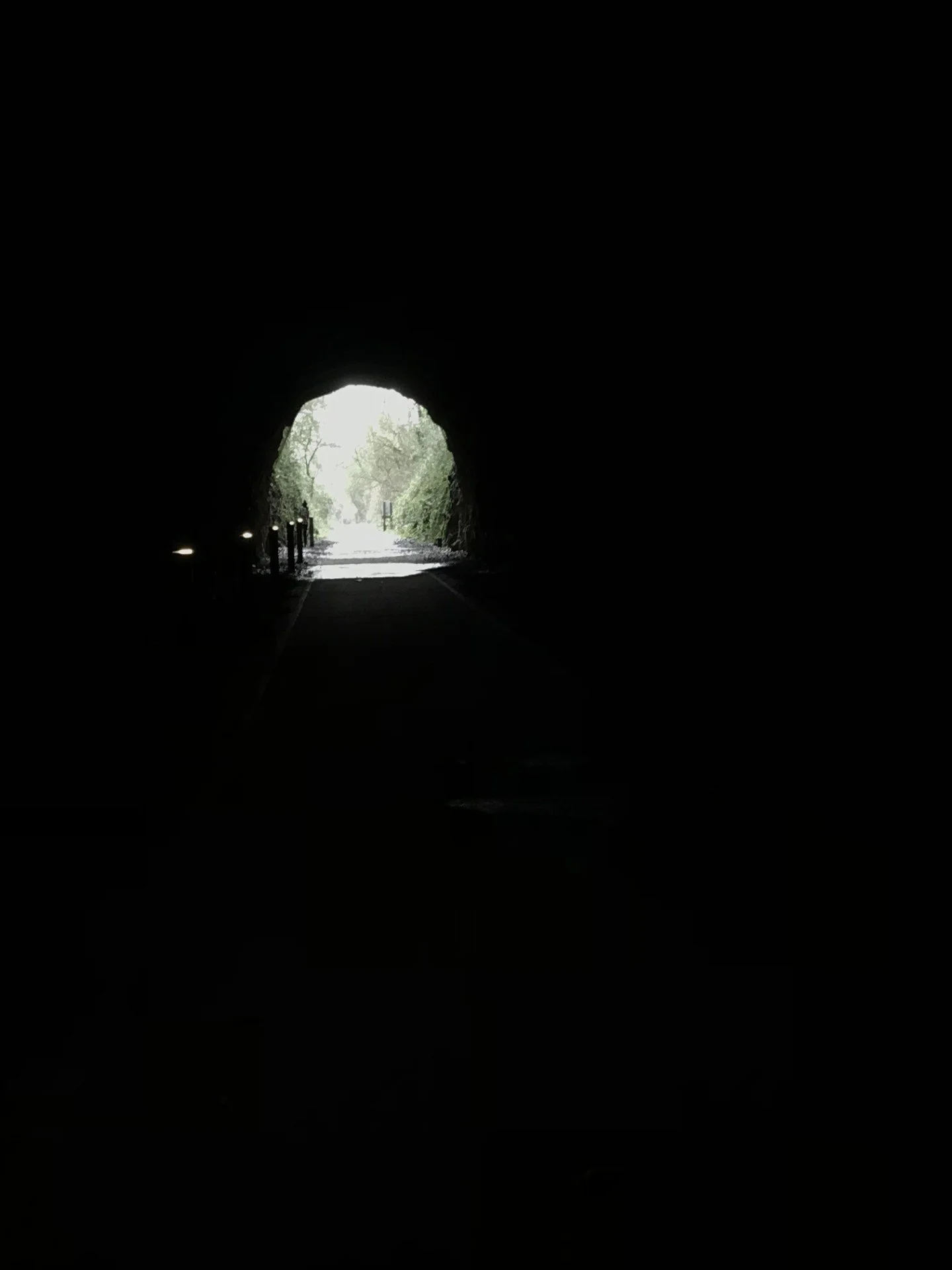
What was planned to be a 5-mile walk turned into a 10 miler.
The left foot fourth toe was complaining. Had to stop every 30 mins to take boot off, let blood back into toe/nerve and set off again.
Nevertheless, the training is underway.
With the longest walk at 20 miles and walking each day, I’ll need to get the boots on regularly.
Noticed:
Cheddar reservoir was full and looking good in the sunshine, hence photos.
Early signs of spring, some tiny flowers alongside early daffs and snow drops, some fresh leaves poking out.
Blue plaques in Axbridge…a future photographic collection. Plus a public loo…Hallelujah!
The Two Moors Walking Challenge post #1
Two Moors Challenge - post 1
Bare Bones: Dartmoor to Exmoor, Wembury to Ivybridge to Scorriton to Chagford to Morchard Road to Yeo Mill to Withypool to Lynmouth. Approx. 115 miles
Dates: Tuesday 26th May to Wednesday 3rd June
Days to go: 96
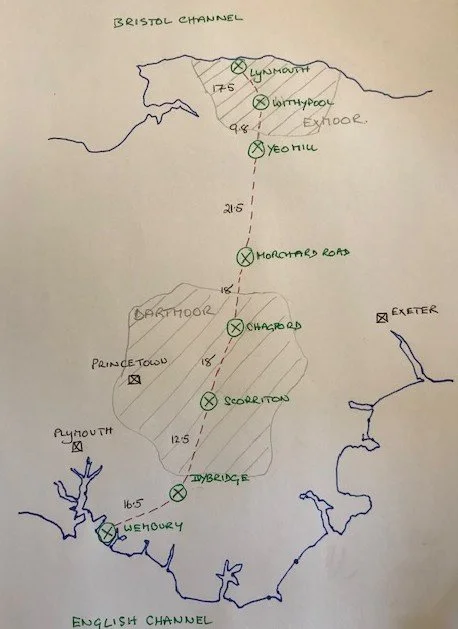
The truth is, I’m not sure if I can do this. To help, I’ve slotted in a day-off in Chagford, so the walk is chopped up into two halves: 3 days to Chagford, followed by 4 to Lynmouth.
I have two reasons for doubting my ability to complete the challenge. First is a toe problem. Second is my failed attempt to cross the North York Moors a few summers ago.
However, with 96 days to go, I can do some prep. The problems in the North York Moors were (a) the toe (b) heatwave (c) carrying a heavy load…and realising I’m not 25 anymore. This time, I have sherpas (!) in the form of luggage transfers, so will only need to take a daysack on the hikes. That should alleviate undue pressure on neck, shoulders, back and most importantly the fourth toe on my left foot which loves to complain if it’s overworked.
But, man, am I looking forward to this! I’ve been pondering the Two Moors Challenge for a few years and last year’s few days on the Camino has given sufficient push to get it done.
I’m looking forward to the scenery, mist and fog permitting, taking photos, sharing the walk with fellow travellers as on the Camino, and maybe some friends who join in for a day or two, and the full moon that should accompany the evenings and nights. And the physical challenge. The longest day walk (given that I don’t get lost) is 22 miles. The furthest I’ve walked for probably a year is not much more than 5 miles, so I need to put that right.
And, if I may, the spiritual challenge. But more of that in subsequent posts.
Kit: My trusty leather uppers and Vibram soled walking boots are showing signs of aging. A split is developing between sole and upper leather…so…yesterday I purchased a new pair. A lighter variety, more for moors than mountains. Other than that, I think I have sufficient kit.

Today: a cold Northerly, diagonal cold rain, and a dull overcastness that has seemingly deposited itself like a beached whale, over much of the UK refusing to move on, all add together to keep me indoors, two jumpers and a scarf on, until the house decides to pay attention to the central heat.
Heart of flesh
Gifts are only gifts if given freely
Oh God, please don’t make me
Remove the wrapping paper
It’s the thought that counts
But He said, ‘But if I hear you
Pleading with Me,
The gift is already given’

I felt the gift like a child
It was knock-hard and
A chill ran through the paper
I held it and looked
Into His eyes
But He reached out
‘Look at the label’, He said
So, I did
‘In remembrance, only’
Floored, as so often
My tears, the overflow
Of a heart of flesh, ran free
The Last Supper ‘You are clean, but not all of you’ John 13
Imagine for a moment, the impact of these three words on the disciples at the Last Supper ‘You are clean’
Now before the Feast of the Passover, when Jesus knew that His hour had come that He should depart from this world to the Father, having loved His own who were in the world, He loved them to the end. And supper being ended, the devil having already put it into the heart of Judas Iscariot, Simon’s son, to betray Him, Jesus…rose from supper and…took a towel, poured water into a basin and began to wash the disciples’ feet…And Peter said to Him, “Lord, are You washing my feet?”
These opening verses are a beginning-to-end summary of events that the subsequent verses flesh out.
1. Before Passover…John reports Jesus’ state of mind and spiritual understanding, from deep in his relationship to and with God, the Father. From this well of knowing, which included knowing his suffering was imminent, he orchestrates the supper in the upper room,t he feet washing, the betrayal, and the arrest.

2. And supper being ended…after the Passover meal (some details of the meal are contained in the other gospels) John records Jesus washing the disciples' feet. We will come back to this. I do not believe the text supports the notion that Jesus washed Judas’s feet. This is key.
3. The devil having already put it in the heart of Judas to betray him…note the past tense. That is, before supper, the devil had done his work. This is supported by other texts e.g. Luke 22v3. Judas left midway through the meal as he and Jesus dipped bread together. The feet washing was after supper. As it says later, ‘Having received the piece of bread, he (Judas) then went out immediately. And it was night.’
4. Jesus said to Peter, “You are clean, but not all of you.” During the foot washing, Peter challenges Jesus to wash him from head to toe, not just his feet. But Jesus disarms him with this typically enigmatic comment: ‘He who is bathed needs only to wash his feet’.
What does this mean?
I can only share my ponderings; this morning’s ponderings, in fact.
Jesus was talking figuratively, not literally, although his statement works in the real world of baths and stepping out of the bath onto an unclean surface.
Spiritually, Jesus saw Jesus and the eleven as clean. When Jesus whispers to us through the gospel ‘You are clean’ we hear perhaps the most profound three words we will ever hear. Those three words contain complete forgiveness and an unshakeable restoration. It is heard in other forms littered throughout Jesus’s parables e.g. Luke 15’s triple set of ‘I was lost but now I’m found’ parables.
Judas only heard ‘unclean’ and ‘woe unto him who betrays me’ and ‘what you are about to do, do quickly’ and ‘it was night’. He left with his feet unwashed into the night.
But what of the eleven, and Peter? Peter who denied Jesus. The eleven who ran away? Did Jesus’s words ‘You are clean’ last only a few hours before being dismantled in failure and regret?
No.
The chasm between ‘You are clean’ and Jesus’s prediction of Peter’s denial seems unbridgeable, unfathomable, and yet it is contained and dealt with in Christ through the cross when he took upon himself all our iniquities, moral failures, sin, and broken-heartedness.
It is always this. When we fail – and we do as believers – we come back to those three words ‘You are clean’.
In Peter’s experience, his denial proved to be a stepping stone through which his love for Jesus and Jesus’s love for him would not only be revealed but taken deeper, into a new dimension.
Equally, for Paul, who had arrested and harassed believers, he wrote these words.
‘He made Christ, who knew no sin, to be sin for us, that we might become the righteousness of God’ 2Cor5v21
Perhaps in some way you feel you have denied Christ, or are walking away from him, having been lured away. May Christ come to you and may you hear those three words once more, ‘You are clean’ and once again, like Peter on the beach, confess ‘You know that I love you’, and leave your nets to follow Him.
Book Review: ‘Surrounded By Idiots’ Thomas Erikson Penguin – 2019
Red, Yellow, Green, Blue - four personality types, why they clash and how to pour oil on troubled waters
‘When I was 25, I met Sture…one of the first comments Sture made was that he was surrounded by idiots…I asked him if he really believed that he was surrounded by idiots. He glared at me and explained that few of his employees were worth having…his definition of idiocy was anyone who didn’t think or act like him…I have one thing to thank Sture for – he awakened my interest…without him this book would never have been written’
What follows are approximately 250 pages of distilled wisdom as Erikson studied human personality types and explored how we might do better than Sture and learn how to function well in mixed-personality teams.

From the cover and on through various diagrams throughout the book, Erikson has colour-coded the four main personality types as Red, Yellow, Green, and Blue.
Sture was a Red.
Reds are quick to react, take control, and lead, unconcerned for the impact on decisions on others. Decisive and confident.
Yellows are impulsive, talkers, involve others, team players, enthusiastic, optimistic, and charming.
Greens are calm, stable, avoid conflict or change, thoughtful, patient, loyal team players.
Blues are slower, analytical, meticulous planners, relate better to spreadsheets and data more than people, well organised.
Erikson contends that ‘about 80% of all people have a combination of two colours that dominate behaviour’, but the aim of the book is not simply to enable readers to self-analyse or identify others’ colours, but to learn how to relate better with individuals with different colours.
The style of writing is factual without being too technical and laced with humour.
In an interview with a Red, he asked ‘What advice would you give to people who meet you?’ The red lady, a CEO, answered ‘Put your energy into the task at hand. You can socialise at the weekend’.
To a blue economist, he asked, ‘Do you ever hang out with yellows?’. He replied ‘No. I tend to avoid them. I wouldn’t be able to stand all that talking…about everything and nothing…five minutes with a yellow I’m at my wits' end.’
Towards the end of the book is a useful quiz to test how much you have understood, and a comprehensive index so you can quickly refer to any main points.
I enjoyed Surrounded by Idiots. Some similar systems, for example, the Enneagram, are more complex. I prefer simplicity; having four main types worked for me. Of course, analysing others and oneself using any similar tools is quite good fun, but the real value of the book is to go beyond self-awareness to learn how to ‘love one’s neighbour as oneself’ even when wired completely differently.
My L-plates are firmly fixed on.
It always comes to this
Subtraction, loss, distance…and yet?
Curious how subtraction
Weighs heavy
Like cold cement
On an old fire
Or loss sharpens
The appetite
Like the blades
Of hail on unkempt hair
Or how distances that
Cannot be bridged
Drag on the memories
Of private maps
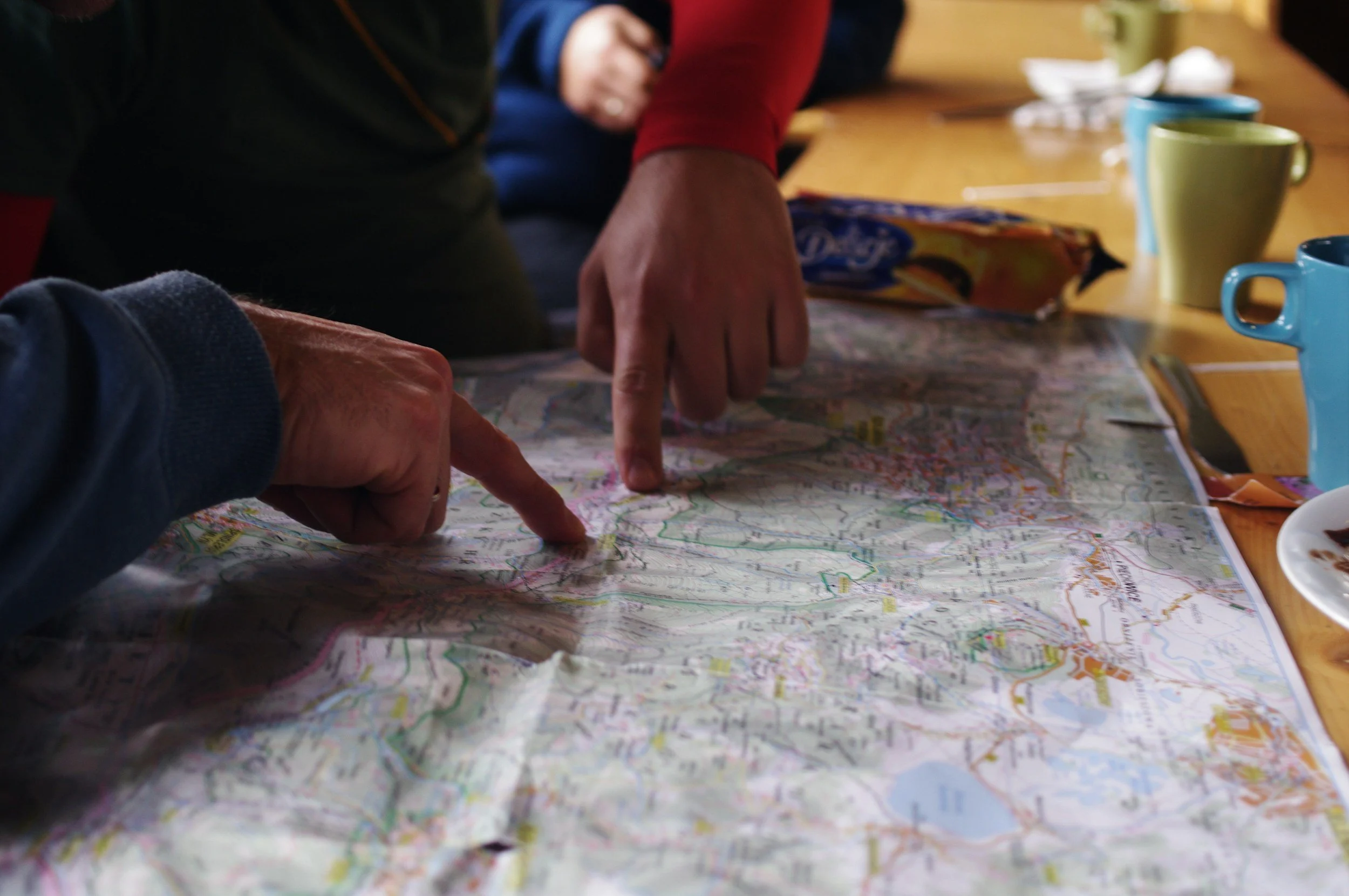
But maps have
A power of their own
To clothe the feet
In hours and miles
And lift the eyes
To the unexplored
Crevasse, col, or cwm,
And down to laces untied
It always comes to this
Squinting in the morning sun
A stretch, a sigh, then
To add one small step
Stripping Away Familiarity Proverbs 3 v 5&6
Nakedness is actually normal…isn’t it? But we have this clothing urge as well. But twice a day, at least, we get to see the truth!
Trust in the Lord with all your heart
And lean not on your own understanding
But in all your ways acknowledge Him
And he will direct your paths
Yes, of course, this can read like religious mumbo jumbo to agnostics or atheists, and an over-familiar verse to Christian believers.
Is there any need for comment? The words are plain enough. It’s not a parable or a prophecy. It’s not written poetically (although I do like the two words ‘lean not’…for me, that’s poetic). Putting it bluntly, it’s a radical challenge: the question is not whether it’s true, but whether, having believed the bible is God-breathed, you have found it to be true in your experience?
This morning, I read this verse for the umpteenth time and nodded with approval. Like an old friend, it possesses a comforting familiarity, but before I could sit back and relax, I was taken back to school for two further lessons.
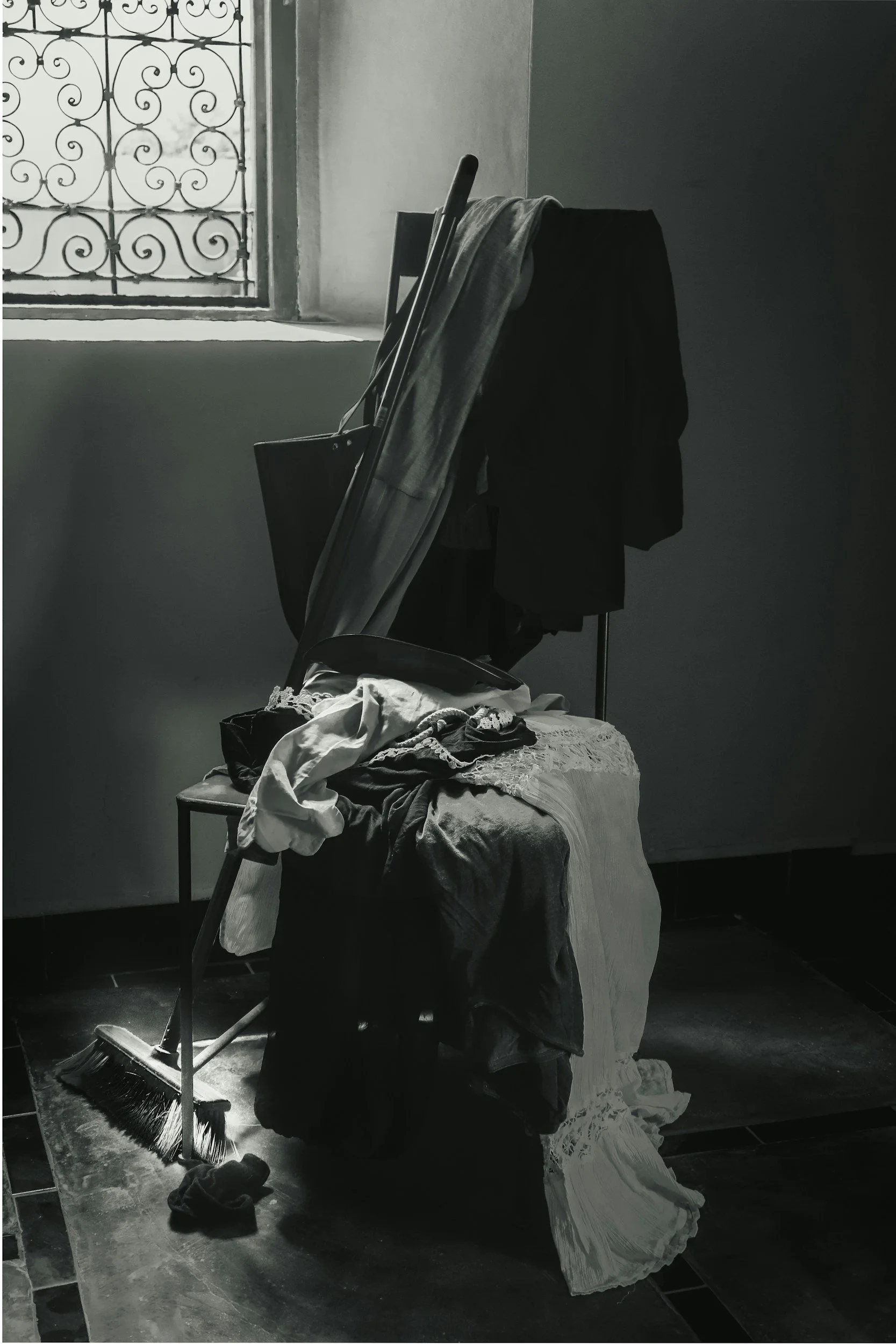
I have never been to a striptease joint, but one is blessed with an imagination! And to be fair, don’t we all strip at least once a day, if not twice, minimum?
One piece of clothing followed by another is taken away, revealing the truth.
Truth 1. Heart. Trust in the Lord with the core of your being. It’s deeper than emotion, or thought, or motivations. Those are the surface waves of the soul. The heart is like the deep. It ignores thoughts that may conflict with the heart. It relegates raging emotions or numbness to a lower division. It stills the will, the terrible need to do something. The heart is trusting in the Lord when and only when, as in Psalm 23, He has made me lie down. ‘The Lord is my shepherd, I shall not want. He makes me to lie down…’
Truth 2. In all your ways, John. ‘I have ways, Lord?’ ‘Yes’. I sense a divine chuckle. He’s taken almost 68 years to show me this. I have ‘ways’. Here are some of them: Loud and confident people make me shrink. I have a multitude of ways of avoiding them, finding quieter places, going to the loo, sitting quietly, waiting for the storm to pass. I’m not a party animal. Almost as a contradiction, I have an instinct for leadership and form teams to accomplish a task. I make a cup of tea in a certain way; pronounce scones correctly (!); prefer to run into the sea than step in, toe by toe. Observational self-deprecating humour makes me laugh. I love Billy Connolly, but I also have a poetic/prophetic streak that demands some inner switch to flip – some might say left to right brain. I’m not sure. I have my ways.
Two pieces of familiar clothing stripped away.
It’s not simply that ‘acknowledging the Lord in all your ways’ means His direction comes first, even if it takes us beyond our comfort zones, but that the Lord has been with us all, in the formation of all of these things. ‘Our ways’ are what make us ‘us’ and not the next person. Our uniqueness. And, in Christ, there is a new ‘us’, a new creation…the essential you formed in the core of our being, our new hearts, being formed as the Spirit of Christ witnesses and communes with our new spirit, given to us in the New Covenant.
And he will direct our paths.
This is not some SatNav divinity, a guidance system from above the earth, from heaven as if heaven is a long way off. Or via a set of commands that we gird ourselves up to follow, come what may.
No, we are being discipled to live like Jesus. Relying on His voice within: ‘My sheep know My voice’, so that we end up being able to say to family, friends, work colleagues, neighbours, and a watching world ‘I only do what I see my father doing in heaven’. Well, we might not put it quite like that, or we’d appear to be religious nutters only capable of quoting scriptures like automatons or cult-like clones!
To any agnostics and atheists reading this, I challenge you to ask a believer or two about their experience with this verse. You may discover some intriguing stories! To any believer reading this who’s struggling, I struggle. I fail. I go off-piste. I’m often like a dog that hasn’t learnt to heel. But I know who has bought me and who is at work in me. It’s all grace. He calls me back, and on we go.
Last point. Trust is trust. It never changes. It’s standing at a bus stop waiting for the bus. It’s believing that what God has spoken is trustworthy and will come to pass. It’s swimming, knowing the water will support you. It’s believing the seasons will continue, or that tomorrow the sun will come up. ‘Trust in the Lord with all your heart’ when He says ‘He will direct your paths’.
Rolos
Life on the other side?
In the winter playground
The boy delves
In his pockets
Grey shorts over
Pink chapped thighs
As had all the others
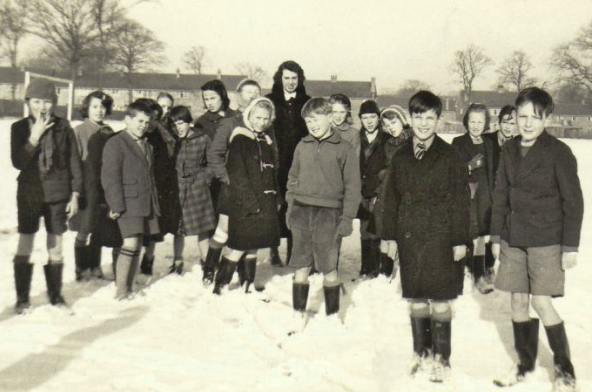
December: break,
Ice and snow
Toggles and duffle coats
And bare shins
His thin gloves
Locates the target
A packet of Rolos
He unfurls the silver foil
Exposing dark brown circles
And, hand thrust out,
The Rolos are offered
To scraped knees
Footballs and wellington boots
In return
Impenetrable silence
No matched fingers
Extended to the silver foil
No swaps for sugar cigarettes
No words, no nods
A rebuff so irreversible
And dense as a vacuum
His first taste
Of estrangement
Of invisibility
Of finding the others
The shunned ones
Made rich with less
The Rolo lovers, those of
The Cave of Adullam
Dwellers to the East of Eden
Lepers with perfect skin
A kingdom of includers
Thawing the ice
Longing for Snow
I know when I’m old - when I don’t long for snow. So far so good! Boots are ready.
January
A month to long for snow
Empty blue skies
And fierce cold
Sharp, virus-killing cold
Snow drops
And crystal-clear air
Short days
To compress an excess of joy

February
To rob Christmas
Of Rosetti’s bleak midwinter
Here is grey shadow
And cold to be avoided
A shudder that no scarf
Can repel
Unless January’s prayer
Is answered in
Blizzards blasted
To the waiting Earth
And a new generation
Learn how to spell toboggan
And frozen hands
Launch endless missiles
A month that demands
An open fire
That scorns the industrialness
Of ugly rectangular radiators
Deep cries for dancing flames
The crack of logs
Of wet gloves, and scarves
Steaming their way to Tomorrow

All is quiet
Cars are hibernating
Just the trudge
Of boot on snow
Let no one wish for dirty slush
Eliminate ‘thaw’ from the lexicon
March
March can stay away
Its unwelcome longer days
A threat to…this
Enforced Sabbath
More Than a Barber
Usually a barber’s is a room full of chatter, radio noise, clippers, and traffic outside…not on this occasion
Booking the barbers online?
Feels vaguely feminine
Am I having my hair ‘done’?
Arrived on time
Pushed on the door
And sat down, alone
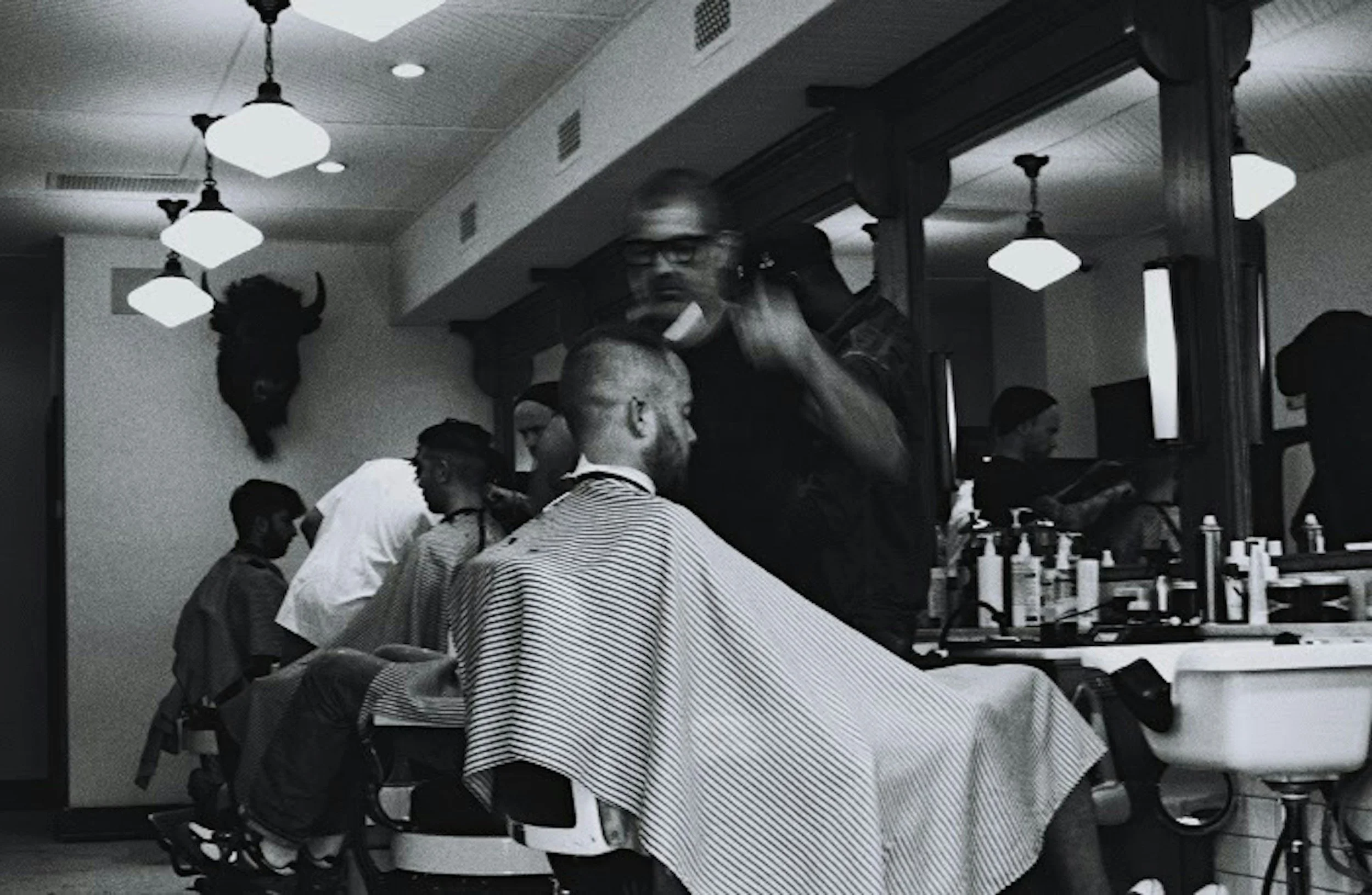
A silent one, his head
Still as a barn owl
Is in the chair
The absence of talk
Of footy, or Trump, or carburettors
Is an unusual interlude
And the silence
Like invisible honey
Circulates the room
Looking for anyone
Who wishes to
To enter in
Into the unknown.
In the background
The circumcision
Of surplus hair
Continues, the squeak
Of the barber’s shoes, the
Schink of blades
The inane radio
Saying nothing, oblivious
To the moment when
Confessions are made
Clues to some inner world
Left scattered on the floor
Forebodings, snip
Longings, snip
Hopes and dreams, snip
The barber,
Waterlogged
With our words
Like a priest,
Unburdens himself
Sighing into the night
Gifts
Something magic about a 3 year old grappling with wrapping paper
Become like little children?
Infants? Really?
So, on with the shorts
Sit cross-legged, for hours
Or lie on your back, feet
Up on the sofa
Pick your nose if you must
And daydream

Make faces
And odd noises
Plop your cheeks
And play hide and seek
Try so hard
To stay quiet and hidden
For five long seconds
Become three again
At the sight of wrapping paper
Be bubbly with excitement
And use your perfectly-formed
Three-year-old fingers
To prise up and away
All that Sellotape
Let your eyes
Grow larger than the Moon
And learn joy, learn love
Learn Amazing Grace
Learn that sweet sound
The music of heaven
That longs for you
Not to be stiff-necked
But let the tears fall
As you collapse
Back through the griefs
The broken-heartedness
The shields
That have not saved you
Hold your hands out
And see you are three again
Three at last! Three at last!
Thank God Almighty, we are three at last!