The Fragrance of a Tomb
The New Testament accounts of the death and burial of Lazarus and Jesus, if nothing else, take us into the burial customs of first-century Palestine.
The Burial of Jesus
This morning, I read the very familiar passage describing how Joseph of Arimathea and Nicodemus secured the body of Jesus and took 75 pounds of myrrh and aloes to soak into the wrappings for Jesus’ burial in the garden tomb.
It’s extraordinary to think I’ve known this passage since childhood, but until this morning had never smelt it. The body of Jesus and the tomb would have smelt myrrh and aloes
Joseph of Arimathea asked Pilate for the body of Jesus. Now Joseph was a disciple of Jesus, but secretly because he feared the Jewish leaders. With Pilate’s permission, he came and took the body away. He was accompanied by Nicodemus, the man who earlier had visited Jesus at night. Nicodemus brought a mixture of myrrh and aloes, about seventy-five pounds. Taking Jesus’ body, the two of them wrapped it, with the spices, in strips of linen. This was in accordance with Jewish burial customs. At the place where Jesus was crucified, there was a garden, and in the garden a new tomb, in which no one had ever been laid.
And 75 pounds in weight (100 Roman pounds or the equivalent of 75lbs (just over 5 stone) is a significant weight to carry through the streets of Jerusalem. Burial, due to the warm climate, was usually carried out immediately to offset any odour from rapid decomposition.
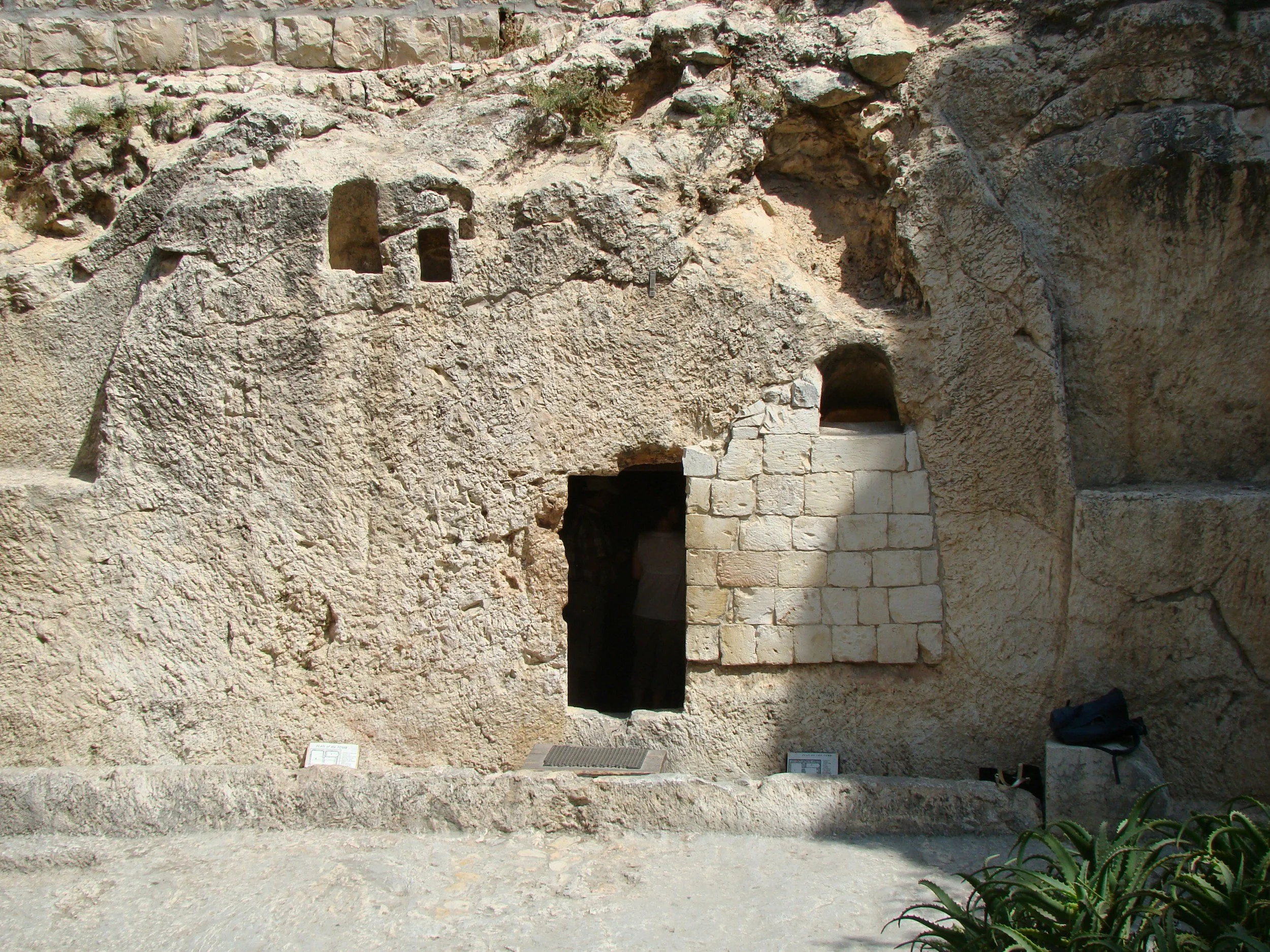
I can only imagine that 75lbs was excessive, only affordable by the very rich, and a reflection of the love and honour Joseph and Nicodemus wished to pour out to Christ in his burial. An extraordinary act of bravery since the highest powers were involved in his crucifixion only hours earlier: Pilate, the High Priest, the Sanhedrin, and the crowd who had called on Pilate to order Christ’s crucifixion. Scripture also states that the Romans had placed a guard on the tomb. The burial was an entirely male act, though Luke records that the women, who were to return with more spices and fragrant oils after sunrise two days later, witnessed the burial, the washing, and the anointing work of Joseph and Nicodemus.
‘And the women followed (Joseph and Nicodemus), and they observed the tomb and how his body was laid’
When Joseph and Nicodemus had finished washing the body, wrapping it in cloths impregnated with the myrrh and aloes, they left the wrapped body of the Messiah on a stone slab in the tomb, and rolled the stone across the entrance; later sealed by the soldiers. (Mt27v62-66)
If I may be permitted to speculate, by the third day, had it not been for the anointing work of the burial party i.e. Joseph and Nicodemus, the tomb should have smelt putrid due to the decomposition of the body.
There were two reasons why it didn’t:
1. The body wasn’t there. Jesus had risen from the dead. It didn’t decompose
2. The linen clothes, and therefore the tomb, would have smelt very fragrant due to the anointing spices and oils
When Peter preached the first sermon on the Day of Pentecost, he quoted Psalm 16:
‘You will not leave my soul in Hades, nor will You allow your Holy One to see decay’ v27
The Burial of Lazarus
When Jesus arrived at the house of Martha and Mary, Lazarus, having died and been wrapped and buried, He commanded that the stone that lay against the tomb be taken away.
‘The Jesus, groaning in Himself, came to the tomb. It was a cave, and a stone lay against it. Jesus said, ‘Take away the stone.’ Martha…said, ‘Lord by this time there is a stench; he’s been dead four days’…Jesus cried out with a loud voice, ‘Lazarus, come out!’…he came out bound hand and foot with grave clothes, and his face was wrapped with a cloth. Jesus said to them, ‘Loose him, and let him go!
There are some significant differences from Jesus’s burial. No circular stone and no sealing. The entrance to the cave is closed with a stone, which is taken away, not rolled away. Evidently, the burial clothes of Lazarus had not been impregnated with expensive spices because Martha said ‘he stinks’; present tense. Lazarus had died, been buried, and had started decaying in the heat; the cave stank, which makes the raising of Lazarus even more remarkable. The decay was reversed and, once freed from the grave clothes, he walked freely.
Evidently, the burial clothes of Lazarus had not been impregnated with expensive spices because Martha said ‘he stinks’; present tense
In the following chapter, chapter 12 in John’s gospel, six days before Passover and Christ’s crucifixion, Lazarus is sitting at the table with Martha and Mary, his sisters, Jesus and the disciples, and Mary appears with ‘a pound of very costly spikenard and anointed the feet of Jesus’.
It is important to note that any suggestion that Mary could have used this to anoint her brother’s body and grave clothes is an argument from silence; we don’t know how or when Mary obtained the spikenard. But having it in her possession, she uses it to anoint the feet of Jesus.
Jesus’ view of this extraordinary act was to say, ‘Leave her alone, she has kept this for the day of my burial’.
And, just like the garden tomb would smell days later, ‘(Mary’s) house was filled with the fragrance of the oil’.
To conclude. Sometimes we need to use all five of our senses – including the sense of smell - to fully imagine a story; to imagine being in its location and breathing it in. Paul writes:
‘Now thanks be to God who always leads us in triumph in Christ, and through us diffuses the fragrance of His knowledge in every place, for we are to Him the fragrance of Christ amongst those who are being saved and those who are perishing’ 2Cor2v13,14