Let’s Talk about Sabbath (i)
You’re about to leave the house to drive cross-country to watch Harlequins v Bristol Bears. You reach into the tub…the car keys have vanished. With time leaking away and panic rising, but motivation at an all-time high, you ransack the house, searching for the keys.
Ten long minutes later you find them, on the bed, under a pile of washing.
Joy floods your innermost being, your heart rate steadies, you vow never to lose sight of your keys, and within a minute you’re driving down the road, singing ‘I once was lost, but now I’m found’.
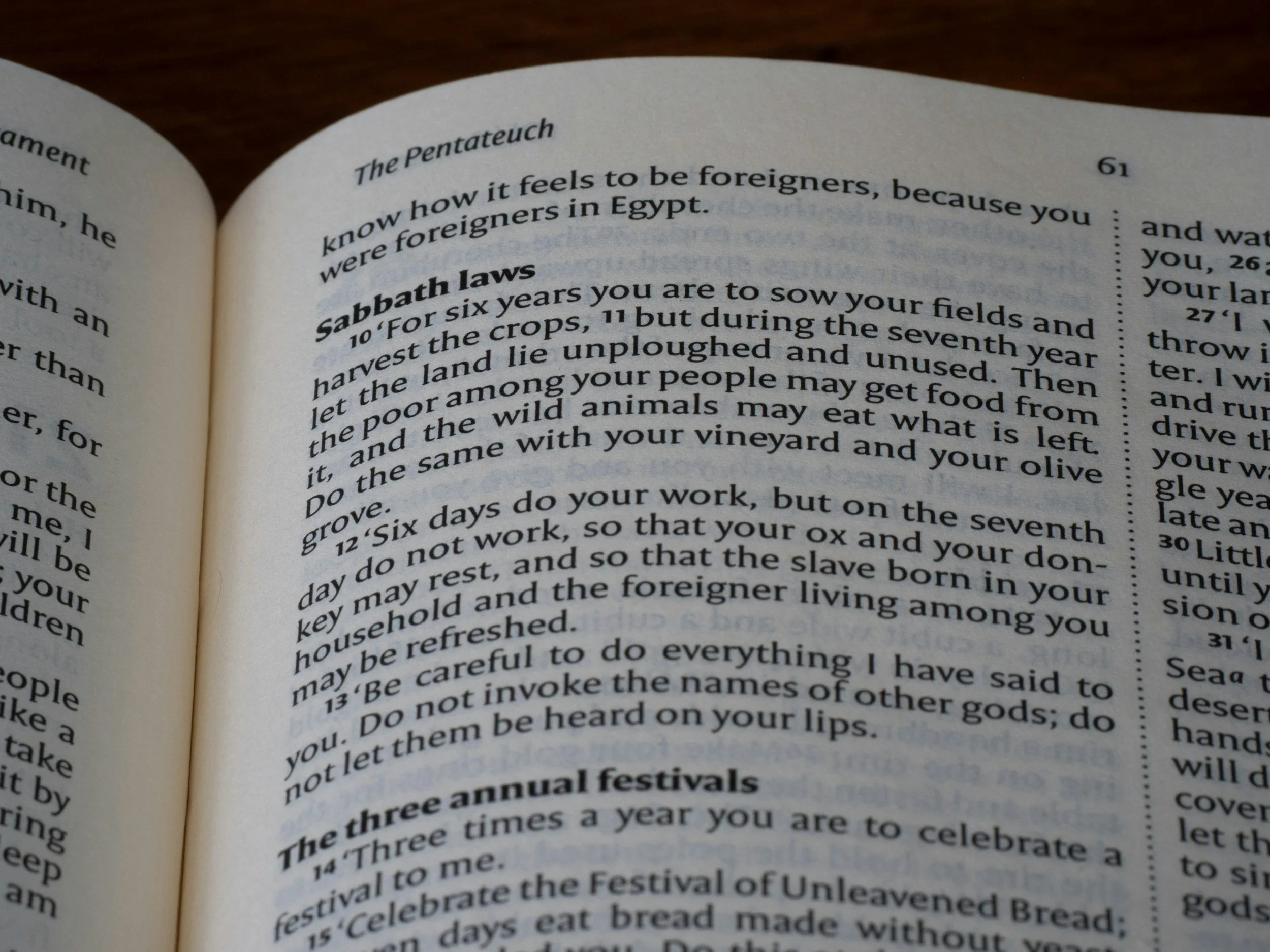
Searching for the true meaning of Sabbath is similar to that frantic search. I can never seem to rest. To find peace. Have we lost touch with the Sabbath? Is it hiding under layers of history, theological arguments, and a changing economic climate? Is it even a relevant question – after all, through the gospel we’re not under the Law, so why mention Sabbath, or the Sabbath?
What do we know from the New Testament?
How did Jesus handle the Sabbath? Did he teach anything regarding the Sabbath? What about the Ten Commandments? Hasn’t the Friday/Saturday Jewish Sabbath been superseded by the Lord’s Day ie Sunday, to celebrate the Resurrection?
‘And he entered the synagogue where there was a man with a withered hand. They watched him closely to see if he would heal him on the sabbath, so that they might accuse him. Jesus said to the man, ‘Step forward,’ and to the Pharisees, ‘Is it lawful on the Sabbath to do good or to do evil? To save life or to kill?’ But they kept silent. And when he looked around at them with anger, being grieved by the hardness of their hearts, he said to the man, ‘Stretch out your hand’, which he did. His hand was restored. Then the Pharisees went out and immediately plotted with the Herodians how to destroy him.’ Mark 3v1-6
A few verses before in chapter 2, Jesus had taught: ‘The Sabbath was made for man, not man for the Sabbath’.
Whatever conclusions you may draw about external observance of the Sabbath or Sunday, a useful check is to ask whether the observance has become more important than its original purpose…rest, recuperation, healing, life…for our benefit and enjoyment.
The Pharisees were more like a religio-political party, or a political movement, than an established institution. Their manifesto was straightforward and gathered considerable support:
• Israel was sent into the Babylonian exile through disobedience to the Law, idol worship, and oppression of the poor
• To recover national sovereignty – a theocracy ruled by a Davidic and restoration of the Priesthood with temple sacrifices - and rid our soil of foreign rulers, we must obey the Law through Moses
• Obedience to the Law must be enforced – including the Sabbath rest from work from Friday sunset to Saturday sunset
Jesus’s critique of the Pharisees was sharp. For example:
‘Woe to you…you hypocrites. You clean the outside of the cup and dish, but inside you are full of greed and self-indulgence. Blind Pharisee! First clean the inside of the cup and dish, and then the outside also will be clean’ Mt 25v25/26
Jesus was not advocating abandoning the law but knew that attempts at outward observance alone left the Pharisees open to the charge of hypocrisy, being two-faced, saying one thing ‘we must obey God’ but disobeying Him from the heart. And, because the Pharisees had gained political clout and governing power, they were dragging the whole population, Israel, down with them.
‘…blind leaders of the blind. And if the blind lead the blind, both shall fall into the ditch’ Mt 15v16
Jesus continued,
‘…those things that proceed out of the mouth come from the heart, and they defile a man. For out of the heart proceed evil thoughts, murders, adulteries, fornications, thefts, false witness, blasphemies; these are the things that defile a man. To eat with unwashed hands does not defile a man.’ Mt 15v18-20
At this point, I am not writing about the remedy to the human heart but asking the question ‘how did Jesus model for us true sabbath keeping since we are not under the law? If we can answer this question, perhaps we have a chance to make progress as disciples of Christ regarding the Sabbath.
The principal passage to consider is John 5 v16-19:
For this reason the Jews persecuted Jesus and sought to kill him because he had done these things on the Sabbath. Jesus answered them, ‘My Father has been working until now, and I have been working…most assuredly. I say to you, the Son can do nothing of himself, but what he sees the Father do; for whatever He does, the Son also does in like manner’
Jesus was the clean vessel on the inside and outside that he had preached to the Pharisees. He was in constant, uncluttered communion with his Father in heaven. He was the sinless Son of God. The bible calls Jesus the ‘Second Adam’; he was unique. No one who had been born since Adam was created was perfect or had lived a perfect life. Jesus was a new type of man, a fusing of man with God.
The mistake we often make is to assume that Jesus was like a man with superpowers, like Superman, who switched the power on whenever he wanted to. Not so: ‘the Son can do nothing by Himself’ v19.
Later, in the same conversation, he says: ‘I can, of myself, do nothing’ v 30
When the apostle Paul wrote about Jesus he said: ‘he emptied himself, taking the form of a servant, and came in the likeness of men…and humbled himself and became obedient to death, even the death of the cross’ Philip 2v 6-8
Since we have believed and have been baptised into Christ and live as ‘in-Christ-ones’ or Christians, Jesus is living out His life through us, in our form. We are learning and adjusting to a new normal: His life in us. It changes everything…including our understanding of Sabbath.
In chapter 4 in the book of Hebrews, the author is addressing the subject of the sabbath to believers.
‘…there remains a Sabbath for the people of God’ 4v9
This verse has spawned a variety of Christian denominations and communities – and individuals – to adopt some form of Sabbath observance, whether following the Jewish Friday/Saturday model or shifting to Sunday observance. The heart of Sabbath observance, however, is found in the following verse:
‘For he who has entered his rest has himself also ceased from his works as God did from His’ v10
Like Jesus, the believer, an ‘in-Christ-one’ has ‘ceased from his works’.
The author builds on this in chapter 6 in describing the foundations of our life in Christ from which we go on to maturity ‘not laying again the foundation of repentance from dead works and faith toward God…’
Although repentance and faith is the doorway into Christ, it also forms the foundation of our life in Christ as believers, not from ‘sin’, but from ‘dead works’ – that is anything we do that does not have its origin in God. Or, as Jesus put it, ‘the Son can do nothing except what he sees the Father do’.
Two typical examples. A musician volunteers to lead worship. He has qualifications and experience. He’s been a guitarist and lead vocalist in several bands. He is volunteering to help out, to contribute, and so on. But he is doing so from the wrong source. There’s nothing ‘sinful’ in the sense that he’s not transgressing any commandment, but it’s a dead work. It’s come from him, not from the Lord. In another incident, not directly related to the church, a believer has been led by the Spirit, with others' confirmation, to start a tool-hire company. He has no business qualifications or extensive experience with tools, but the Lord has spoken to his heart that He wants him to reach men in the town. The business starts, prospers, and has an impact in accordance with the prophetic word. Five years later, he begins to hear God saying, ‘Lay it down. It’s time to hand over the reins to Me, and I will give it to another’. He ignores this voice; it has become a dead work. Again, there’s no commandment broken, no transgression…and yet, laying it down requires fresh, bold obedience; repentance and faith toward God.
Being ‘born again by the Spirit’ is day 1 of our Christian faith. We are on a journey then of progressive maturity from being babies in Christ to full maturity as we learn to operate from Christ’s life in us rather relying on our own resources.
‘Solid food belongs to the mature, those who by practice have their senses exercised to discern between good and evil’ Heb 5v14
To conclude: the believer is called to a life of continual Sabbath rest from his own works, just like Christ, and to be obedient, like Christ, to do only what he or she sees the Father doing.
What about physical rest? Working for six days and resting for the seventh?
Sure. That’s a healthy lifestyle. It’s wise, if your work pattern permits it. During my teaching career I very rarely – two or three occasions only in over thirty years – worked on a Sunday. I rarely thought about ‘work’ until Monday morning, though I know many teachers’ Sundays, particularly Sunday evenings, are ruined with the stress of worrying about Monday morning.
My personal view is that we have lost more than we gained in England by jettisoning the traditional Sunday when the vast majority of shops and businesses closed. We had a taste of that quietness again during lockdowns and travel restrictions imposed during the Covid pandemic. Many commented how they felt more relaxed and could hear birdsong.
Should we return to Sunday off?
Maybe, but what we absolutely must do is to listen hard to Jesus’s teaching in opposition to the Pharisees:
First clean the inside of the cup and dish, and then the outside also will be clean’ Mt 25v25/26
‘…those things that proceed out of the mouth come from the heart, and they defile a man. For out of the heart proceed evil thoughts, murders, adulteries, fornications, thefts, false witness, blasphemies; these are the things that defile a man. To eat with unwashed hands does not defile a man.’ Mt 15v18-20
The first step in spiritual recovery and health is not to impose Sabbath observance. The first step is to clean the inside of the cup; then whatever outward observance you wish to practice will be clean.
How to clean the inside is the subject of the next post.