Chemistry and Christianity? Three Levels of church, after Level 0.
Why isn’t the Presbyterian Church, or the Brethren church, for example, experiencing continuous revival? Or any denomination, stream, apostolic network, group of churches, for that matter.
I’ve picked out the Presbyterians and Brethren because, within their understanding of scripture, they have at least seen that no church in the New Testament had one leader, one priest, one Vicar, one Minister, one Pastor. Instead, there was always, without exception, an eldership, i.e., a group of men (you might want to argue the gender point…but let’s not get distracted) set aside to oversee the congregation.
The other ministries, e.g. apostles, prophets, evangelists, pastors and teachers, fitted in, either locally or as travelling ministries, to that oversight.
And yet, many Presbyterian Churches are as dead, inert, and declining as Episcopal churches.
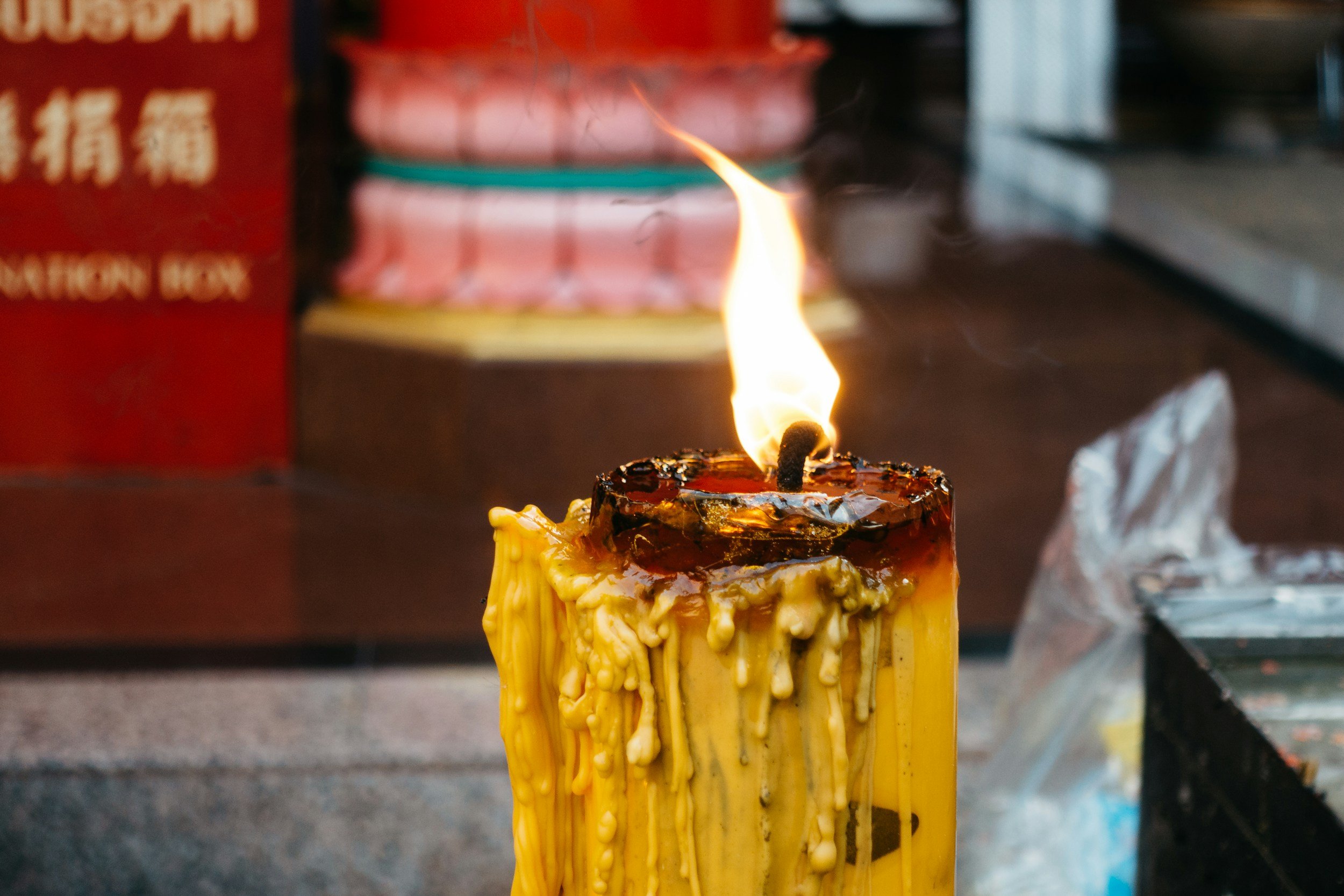
Melting candle wax: solid to liquid

Boiling water- liquid to gas
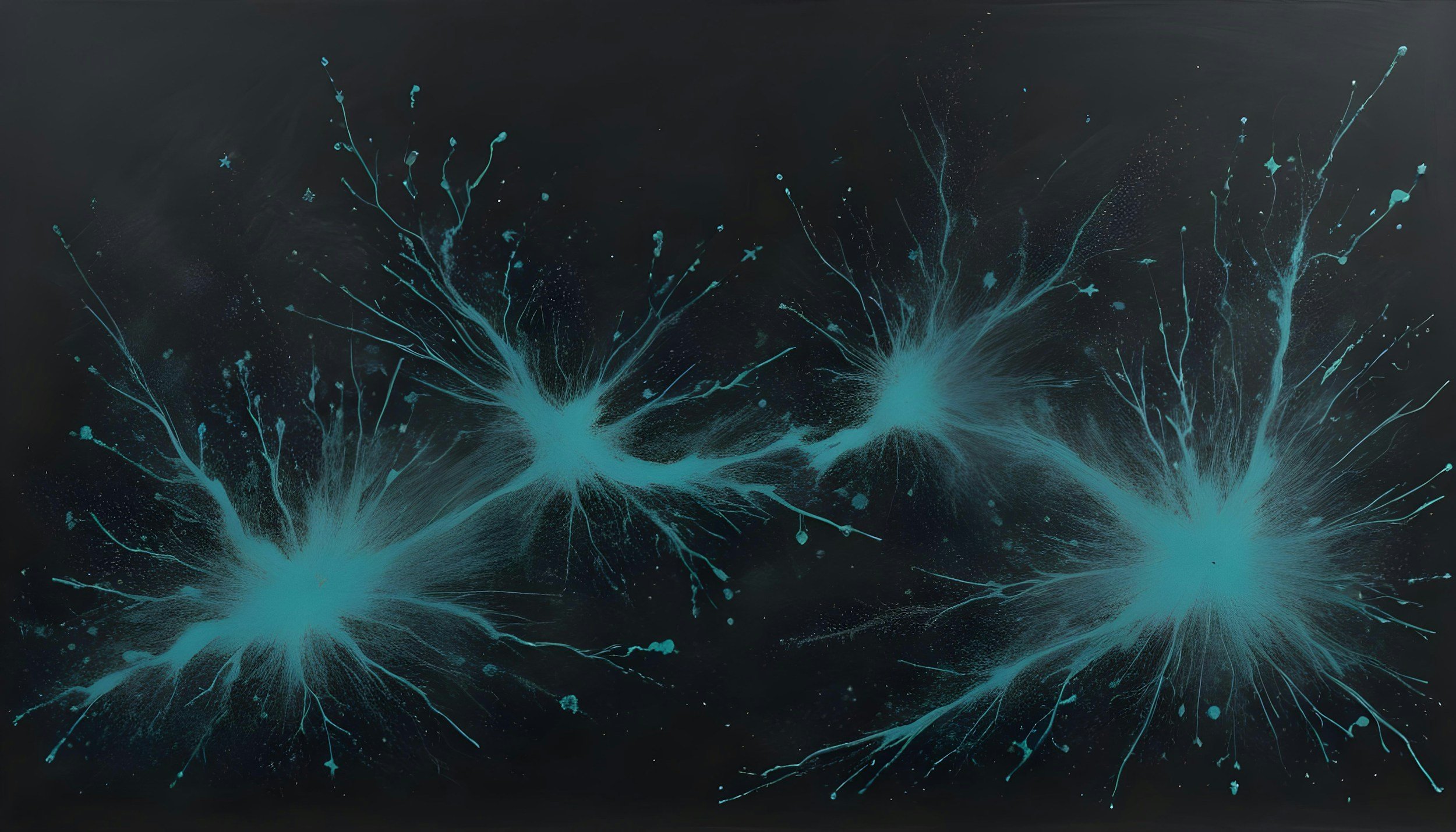
An interconnected plasma
As a Chemistry teacher, it’s surprising how useful, even with very intelligent A-Level students, it is to remind them of the three box diagram they drew aged maybe 11 or 12, to describe a Solid, a Liquid, or a Gas with circles representing the particles (atoms, molecules, or ions).
Plasma may be new to you. But it’s where atoms have been stripped bare. All their orbiting electrons have been removed, and the resulting ions and electrons exist in a plasma…like a very hot soup.
To move from a solid through to a liquid and on to a gas, then plasma will serve as our metaphor for the church.
In the solid state, there is order; it’s well organised, regimented, and traditions are honoured to the letter with little or no deviation. For a church, Sunday services run like clockwork, precisely orchestrated and follow a written or unwritten liturgy. One Sunday is more or less an exact copy of the previous Sunday. It is a well-organised, fixed state. Doctrinally faithful to its founders, but death has set in. It is more akin to CS Lewis’s stone statues in the Chronicles of Narnia.
That is, until Aslan breathes on them and they return to life.
In terms of Chemistry, moving from Level 0 (solid) to Level 1 (liquid) requires one thing. Heat. When Aslan (Jesus) breathes on them, I do not doubt that CS Lewis was alluding to the moment when Jesus breathed on His disciples and told them to receive the Holy Spirit. And on the Day of Pentecost, they were baptised with fire and the Spirit.
The church that formed after the resurrection, with its Jewish apostles and deacons and many believers who believed that Jesus was the long-sought Messiah, risen from the dead, was alive with the Spirit.
‘Now the multitude of those who believed were of one heart and mind…and with great power the apostles gave witness to the resurrection of the Lord Jesus, nor was there anyone among them that lacked’ Acts 2v32-34
Throughout Church history, individuals and whole churches have moved from Level 0 to Level 1. In Britain from the 1970s until today, many thousands of churches have been formed that resemble, or seek to resemble, this description more than CS Lewis’s statues frozen in stone.
New songs are written, art and drama pour out, life has replaced death, and the cemetery has come to life. One Sunday is not like another.
Note: if a church can come alive with the baptism of fire and Spirit, it can cool. Many have. When this happens, the life of the congregation retreats into predictability, tradition, and may retain the outward form, the songs, the governmental structure, or the building, but the glory has long departed.
What about moving from Liquid to Gas, Level 1 to Level 2?
Disaster? Apparently, but this requires a different way of seeing, locked on and into the increasing heat – not from persecutors – but from heaven, from God.
‘At that time a great persecution arose against the church which was at Jerusalem, and they were all scattered (diaspora – ‘spora’ - like seeds blown from a dandelion) throughout the regions of Judea, and Samaria’ Acts 8v1
If you’re familiar with the Creed, the phrase ‘I believe in the holy, catholic, and apostolic church’ is a dynamic statement. ‘Apostolic’ means ‘sent’. The Jerusalem Church was so ‘hot’ that it attracted persecution, but the heat moved the church from Level 1 to Level 2, from liquid to a gas phase.
Does this mean that all ‘charismatic’ churches have to be persecuted and dismantled and sent out, or scattered? No. But, if the heat of the presence of Jesus is among a church, God will propel many in that church out as seeds to ‘die’ elsewhere and in doing so see new churches form, ‘I tell you the truth, unless a grain of wheat falls into the ground and dies, it will remain alone, but if it dies, it produces much grain’ John 12v24
And Plasma? Level 3?
It’s quite possible that no one reading this added a fourth box for Plasma in school. I didn’t. So…maybe we’re stepping too far? Stepping into a ‘prophetic imagination’ to use the idea of a plasma phase as an analogy for moving on, as churches, even further – to a third level?
Under certain conditions, a plasma forces particles to act as an interconnected quantum system.
An interconnected system? Isn’t this the truth described in Paul’s letter to the church in Corinth concerning the church, the body of Christ?
1 Corinthians 12, 13, and 14
‘As the body is one and has many members, but all the members of that one body, being many are one body, so also Christ, for by one Spirit we were baptised into one body…and all drink of one Spirit’ 1 Cor 12 v 12,13
The distinction between individuals has been redefined, and even more so, the distinction between the church and Christ is indistinguishable, just as in the human body, each cell is filled with only one life, the life of the person.
One way of seeing this is to see the hard edges of one person as distinct from another, or of one church distinct from another, or of believers and Christ, as blurred. Individual faith and independence are no longer the goal or the ultimate expression of spiritual maturity; something altogether greater has arrived. Paul spoke of ‘glory in the church through Jesus Christ throughout all generations’ Eph 3v21.
The whole body knows that all things come from God, the gifts of the Spirit, the ministries from God, and the love of God
This state of matter is analogous to a state of church that cannot be sustained except by God alone. Man cannot produce it or copy it. The love that exists is supernatural in origin. The whole body knows that all things come from God, the gifts of the Spirit, the ministries from God, and the love of God. This is a state of continuous revival, not dependent on particular church governmental structures, but as a result of ‘drinking of the same Spirit’.
The church has become an interconnected quantum body in which ‘when one member suffers all the members suffer, and when one member is honoured, all members rejoice’ 1 Cor 12v26
Overall comment
Moving from one level to another requires letting go of the past and welcoming a new pattern from God. Just like music or love can melt our hearts, so God woos us through the invitation of Jesus, to, like the disciples, leave our nets and follow Him.
All analogies break down. Particles have no choice. If the heat is applied, particles respond: solids melt, liquids boil, and from gases, quantum plasmas can form. But we have choice. In the history of revivals, some churches come alive, but others stay put, unaffected or hostile.
When Jesus opened the scriptures in his home synagogue, the truth was revealed: ‘all those in the synagogue when they heard his words, were enraged and rose up and marched him out of the city and led him to the brow of the hill to throw him down over the cliff’ Luke 4v29
But when Jesus said, ‘Follow me’ the disciples ‘left their nets immediately and followed Him’ Mark 1v17,18.
Lastly, in Jesus’s day, the average Jewish citizen may have been drawn to the Pharisees, or the Sadducees, or the scribes, or tax collectors, or Essenes, or preferred one synagogue to another, or none. It doesn’t matter how we describe ourselves: Anglican, Baptist, Catholic, Charismatic, Methodist, Pentecostal, atheist, agnostic, humanist…the real question is whether we are thirsty, or hungry, or searching…for God.
‘If anyone is thirsty, let him come to Me and drink’ John 7v37