Psalm 131 – Psalm for the 21st Century
Recently, I have been luxuriating – maybe too much – in the beautiful Elizabethan language of the King James Version.
How interesting then, to come across Ps131 and find in it a vital message for the 21st Century, where anxiety and a whole range of mental health issues have either been brought to the surface or are taking hold of a greater proportion of the population – particularly the young.
I am not immune.
And the message of this Psalm I take as a piece of life-long learning, which includes the dismantling of one way of living – inherited silently from the surrounding culture – and stepping out in a new, hopefully, healthier direction.
Psalm 131
Lord, my heart is not haughty, nor mine eyes lofty: neither do I exercise myself in great matters, or in things too high for me.
Surely, I have behaved and quieted myself, as a child that is weaned of his mother: my soul even as a weaned child.
Let Israel hope in the Lord from henceforth and for ever.
The real trick with reading the Psalms is not to read them as pieces of ancient wisdom, or instructions about how to live, or simply a collection of songs, most of which David wrote expressing his feelings or his faith.
So much better is to read the Psalms from what we might call an Incarnational perspective. Jesus was ‘the Word made flesh’ – that’s incarnation. In terms of Ps 131, that means that Jesus embodied the words of this Psalm in the way he lived. These words became flesh in Him. He didn’t strive to live like this in some kind of religious zeal; these words were him, and so he lived them quite naturally…for him.
The relevance for us, we will come to soon.
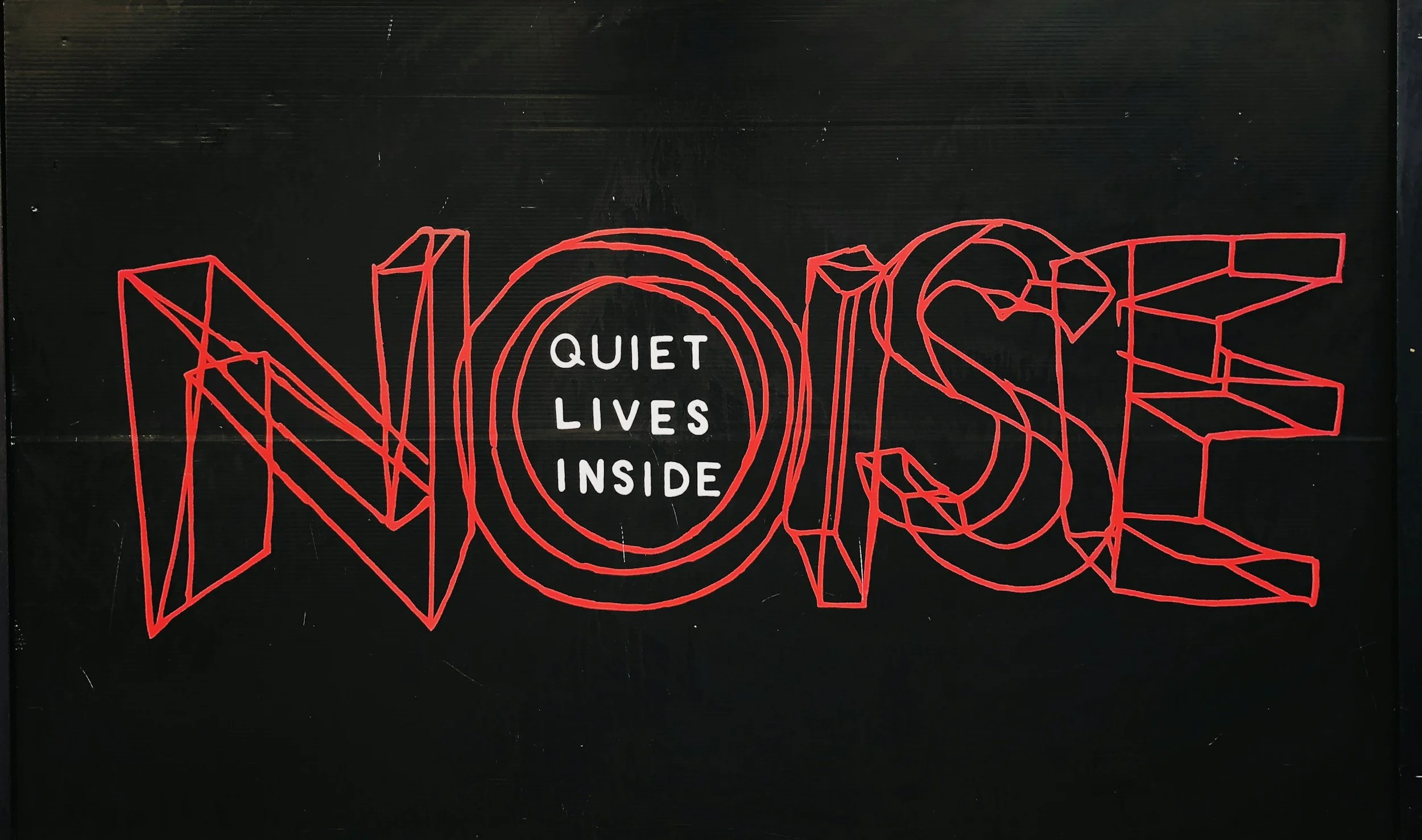
The man described in this Psalm has a ‘quiet soul’ in contrast with someone with a ‘loud soul’.
The soul is the essential ‘you’ that people meet, your individual essence, what makes you different to the next person
What does this mean?
The soul is the essential ‘you’ that people meet, your individual essence, what makes you different to the next person. We can think of it as made up of our ability to think and the ways we think, our intellect, and our emotional make-up, how we react in various settings, and our will, or motivations. Stir those together, and we create a never-ending variety of individuals. The permutations are infinite.
Each of these elements, our minds, emotions, and our wills, is quite remarkable. Some, of course, are brilliant thinkers, but emotionally deficient. Others are exceptionally motivated and never give up, have drive and wit, but maybe not a degree in Astrophysics. Others, still, are experts in empathy and fluent in interpreting the world of emotions and interpersonal relationships. And our soul largely dictates what our bodies do. (There is, of course, an interaction between body and soul; it’s a dual carriageway).
The point of this Psalm is not to deny the endless doorways that our souls open, our potential, but to say this: our souls are good servants but lousy masters. Our souls can become too dominant, too loud, and we need to be thankful for our souls, but look elsewhere for government.
Jesus modelled, pioneered if you will, a new humanity and invites us to discover it for ourselves
Addressing Israel, the Psalmist speaks about living in a new way; the way of ‘hoping in the Lord’. This is what Jesus did, and therefore, if we want to follow Christ, we will learn to do the same.
But not by attempting to copy.
There’s a well-known (to some) verse in the Old Testament that will serve as a key to understanding the gulf between ‘copying’ and ‘living’.
‘Not by might, nor by strength, but by My Spirit,’says the Lord’ Zechariah 4v6
Soulish ability: our understanding, our determination, or our emotional intelligence is our strength and might. Relying on these attributes, or the attributes of our bodies – athleticism, physical strength, good looks – is to rely on oneself.
Leaving behind our dependence on parents and other support agencies and relying on oneself, as an independent, autonomous individual, is heralded as the pinnacle of maturity. It is seen as synonymous with adulthood: ‘standing on our own two feet’ and ‘taking responsibility’ are two strong markers.
Alluring though this message appears, its track record in the real world isn’t a great advert for its meritocratic philosophy.
The message of the Bible, and the example of Jesus, could not be more different.
He modelled, pioneered if you will, a new humanity and invites us to discover it for ourselves.
He gave us clues. For example:
‘Very truly I tell you, the Son can do nothing by himself; he can do only what he sees his Father doing, because whatever the Father does the Son also does’.
John 5v19
The impulse in his life was not himself! He did not strive for autonomy or advocate it for us. His approach challenges all our notions of independence. He did not ‘stand on his own two feet’, but neither did he teach dependence on parents, or others; he lived a life whose source was not himself, but God.
In the famous ‘born again’ encounter with Nicodemus, Jesus registers surprise, ‘Are you a teacher of Israel, and yet you do not know these things?’ John 3v10
He had previously said to Nicodemus, ‘The wind blows where it wills, and you hear the sound of it but cannot tell where it comes from and where it goes. So is everyone who is born of the Spirit’
When Peter stood up on the Day of Pentecost to preach the first post-resurrection-ascension sermon, he ended by telling the fellow Jews gathered in Jerusalem for the feast:
‘Repent, and let everyone of you be baptised in the Name of Jesus Messiah for the forgiveness of sins, and you shall receive the gift of the Spirit’ Acts 2v38
The era of living life via the gift of the Holy Spirit of God had arrived.
Not a gift to be received, unwrapped, and left to one side as we get on with our life, but the gift that enables us to have the same ‘communion’ with the Father as Jesus had as the Son, and to live life from this impulse…not using the soul’s resources as the starting point: my ideas, feelings, or urges.
Back to Psalm 131 and its description of Jesus’s own life. His soul was not in charge. A beautiful soul by all accounts, but the servant, not the master. He didn’t involve himself in ‘great matters’, international politics, the overthrow of the Roman oppressors; he lived a simple life, in communion with his heavenly Father, by the Holy Spirit. Everything flowed from there.
To close.
‘If anyone is thirsty. Let him come to me and drink. He who believes in me, as the scripture has said, ‘out of his heart shall flow rivers of living water’. This Jesus said concerning the Holy Spirit, whom those who believed would receive, for the Holy Spirit was not yet given’
John 7v37-39
He’s not speaking about physical thirst, but spiritual. That is why Ps 131 is medicine for the 21st Century. Meeting demands from others or being weighed down with our own sense of obligation causes us, if we’re not careful, to rely more and more on our souls, which become noisier and noisier. Never designed to carry the weight of a person’s life, it often fails – with real physical and mental consequences, not least of which is anxiety and stress.
Jesus offers us a different way of living.
Not to swap soulish effort with manic religious observance e.g. church attendance, strict prayer schedules, or reading the bible, but to receive the gift of the Spirit and shed a lifetime of dependence on our own abilities, of self-reliance (‘repentance’ to use a biblical term) and become dependent on the Spirit. And to start a new adventure, being moved around like the wind!
Here’s a prayer you can pray, if this fits with you.
‘God, I’ve tried to live standing on my own two feet, bearing the weight of my own life as best I can. You’ve seen it all. I’ve often failed but got up again and tried harder. But now I see you are saying something very different. I’m thirsty, Lord. I open my heart to receive the gift of the Holy Spirit. Teach me to live from your Spirit, not my soul, and like you, only do what the Father is doing. Amen.’