Matthew Chapter 11
To comment on the whole chapter is tempting; in fact, to leave sections untouched feels a little disrespectful, as Matthew evidently put a great deal of thought into how to stitch these recollections, what to leave out and what to include.
The key verses that stood out to me are:
‘After Jesus finished commanding his twelve apostles, he departed to teach and preach in all their cities’ v1
‘Then he began to rebuke the cities in which most of His mighty works had been done, because they did not repent: ‘Woe unto you Chorazin…if the mighty works done in you had been done in Tyre and Sidon, they would have repented in sackcloth and ashes long ago. It will be more tolerable for Tyre and Sidon in the day of judgement than for you’’ v20-24
In the previous chapter, chapter nine, Jesus had given the twelve a measure of His authority to heal the sick and sent them out to preach. Matthew opts not to record the results from their preaching (but if you’re curious, read Luke chapters 9 and 10).
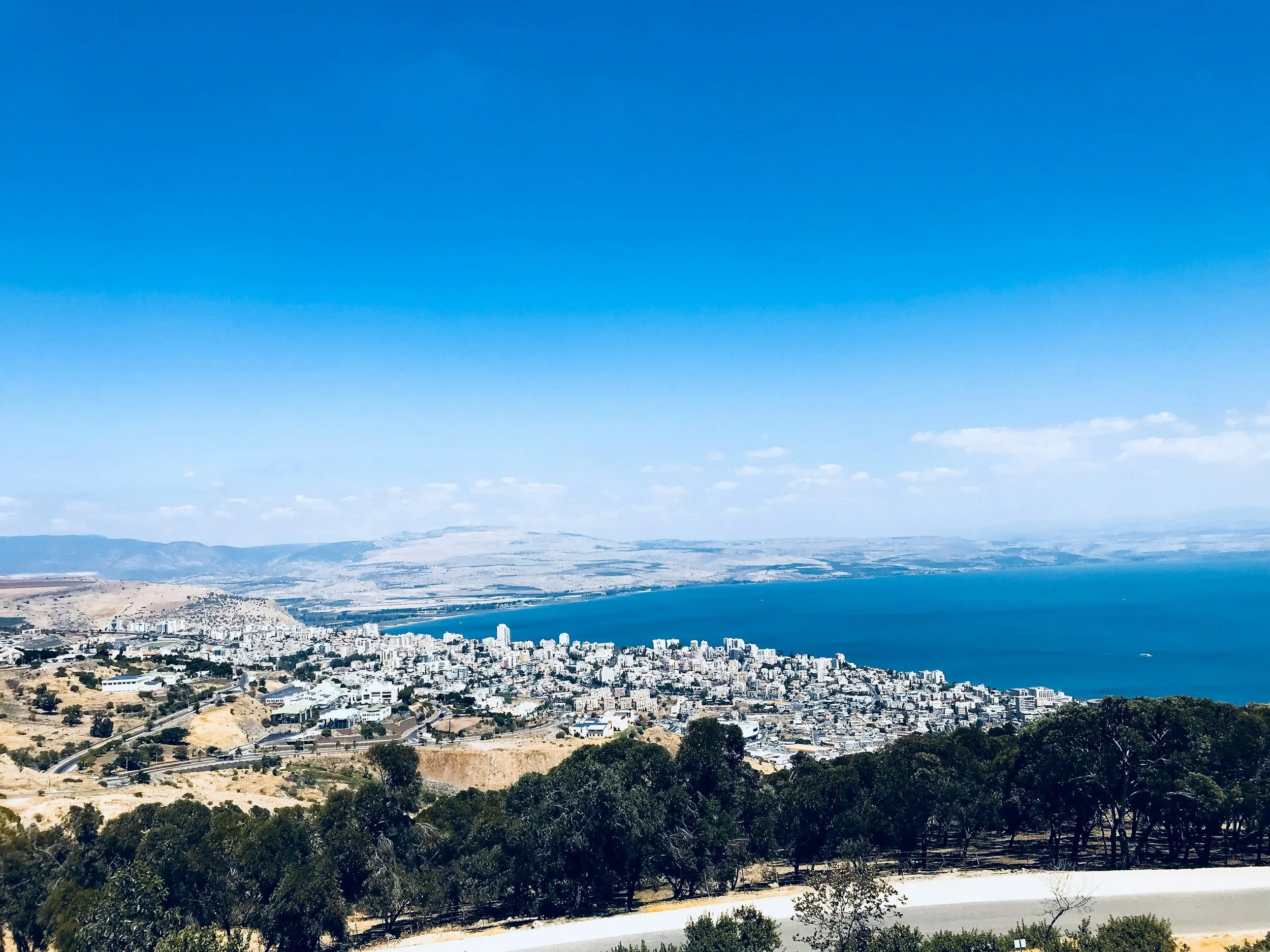
Instead, Jesus takes the discipleship of the twelve to a new level and tells them he will be visiting their hometowns and villages (don’t misunderstand ‘cities’). Stop for a moment and imagine Jesus telling you He would be visiting your village, town, city. Meeting your brothers and sisters, parents, relatives, friends and others that know you and have heard that you’re ‘following the preacher who says he is the Messiah’ or whatever the rumour mill was turning over. Nervous?
What happens?
We read in verse 20 two words that tell us. Not only did He teach and preach; he did ‘mighty works’…just as He had commanded the twelve to do. That would have included miraculous healings and deliverances as well as verbal proclamation; impossible to ignore. Arriving with his twelve disciples, the women, including Mary His mother and Mary Magdalene, and probably many more following Him on the road, entering Chorazin (pop. Approx. 1000) would have caused a stir.
A village of 1000 Jews who had had the scriptures read every Friday in the synagogue, the feasts to attend in Jerusalem, the whole history of Israel and their return from exile in Babylon, now had the Messiah walking along their streets, preaching the gospel, the good news of the kingdom…and yet…no repentance! Jesus is astonished.
But we need to stop and unpick the word ‘repentance’.
Matthew records Jesus referring to John the Baptist, who had ministered a ‘baptism of repentance’ when people came to confess their sins and be baptised. So there is a need to include ‘sins’ in repentance. Acknowledging we’ve broken God’s laws, and our need to be washed clean.
But to reduce the word repentance to the sorrow over sins committed is to misunderstand its force and depth. In the book of Hebrews we read, ‘the gospel was preached to them but the word which they heard did not profit them not being mixed with faith in those who heard it’ Heb 4v2
Guilt, and fear, and shame over sins committed is only half the equation. When the light is switched on, we see all the dirt and grime, of course, and we can no longer ignore it, so we sigh and deal with it…but the key is not the dirt but the light.
When Jesus confronted the world of first-century Israel, He said, amongst many other things, ‘I am the light of the world’. Repentance has two halves – leaving and cleaving. It is the prerequisite of love. Even the marriage vows reflect this: ‘forsaking all others, be faithful to him’. Faithfulness is exactly what the word says – full of faith. You see the light in Jesus and, yes, you may need to repent of particularly shameful acts, but your repentance is really saying, I abandon a life where I am god, where I am in control: ‘I am the master of my fate. I am the captain of my soul’ and confess that Jesus is Lord.
A good picture of the two halves of repentance and faith is the response of the disciples to the Lord’s invitation to ‘Follow me’:
‘Immediately, they left their nets and followed Him’
Clearly, many in Chorazin, despite incontrovertible evidence in front of their eyes, opted to continue in darkness, not the light and heard the chilling words of Jesus:
‘Woe unto you, Chorazin, it will be more tolerable on the day of judgement than for Tyre and Sidon’
But to reduce the word repentance to the sorrow over sins committed is to misunderstand its force and depth
On a personal note, I have seen this. Early on after my conversion to Christ, I asked a work colleague if he would allow me to pray for his girlfriend. Her doctors had told her to rest, not to exert herself, as she was too weak and could die. She had been confined to bed and hadn’t eaten properly for weeks, suffering from anorexia nervosa. He agreed. A few of us prayed on Saturday morning. On Monday morning, back at work, he was beside himself with excitement; she had simply got out of bed and started eating. I asked him when exactly. The same time that we had prayed. But there was no repentance, no faith in Christ as a result. A miracle of healing does not guarantee repentance and faith.
On another occasion, a friend of mine was involved with Tarot cards. I felt impelled by the Spirit to tell her that if she continued to practice divination, her mother – who was an alcoholic – would die. I invited her to church, but halfway through the worship she ran out. She continued to choose Tarot, not Christ. Her mother died.
There is a popular book called ‘The Power of Now’, Eckhart Toll. The bible also talks about Now:
‘Now is the day of salvation’ 2 Cor 6v2
‘Today, if you hear His voice, do not harden your hearts’ Heb 3v7
To conclude, Matthew 11 puts flesh on the bones of Paul’s succinct phrase ‘behold, the kindness and the severity of God’. Before Jesus was born, a prophet called Simeon met Mary and Joseph in the temple:
‘So he came by the Spirit into the temple. And when Mary and Joseph brought in the Child Jesus, to do for Him according to the custom of the law, Simeon took Him up in his arms and blessed Him:
‘This Child is destined for the fall and rising of many in Israel, and for a sign which will be spoken, so that the thoughts of many hearts may be revealed.’ Luke 2
Jesus spoke about this Himself:
‘Do you suppose I came to give peace on earth? Not at all! Rather division’, Luke 12v49-53